
Last updated November 24, 2026
 Sweep & inspection
 Caps & crowns
 Flue relining
 Masonry repair
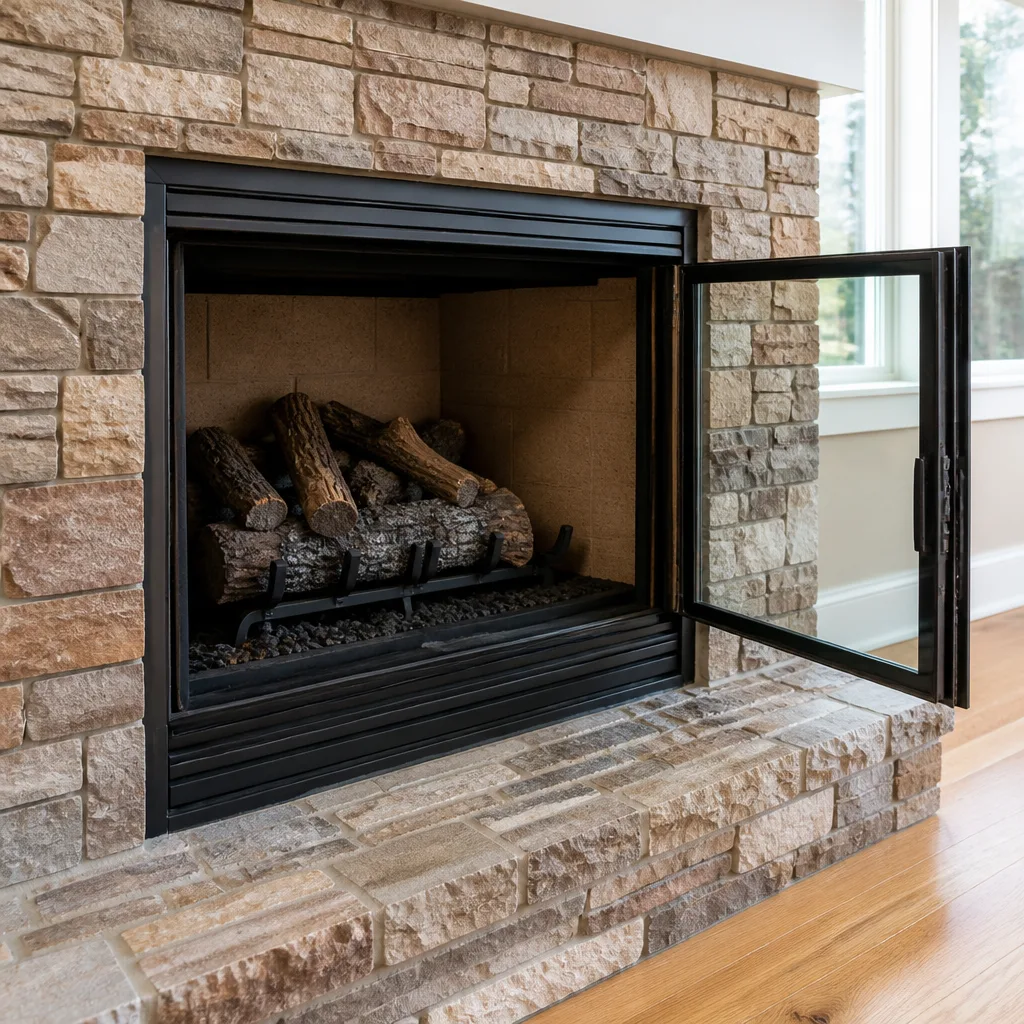 Gas fireplace service
Level 1 sweep and inspection to the NFPA 211 annual standard - flue, crown, cap, and flashing checked and photographed
Chimney sweep logs do not sweep chimneys. They loosen some creosote - which then falls where a brush and vacuum still have to collect it.
Chimney Cleaning Warning Signs: A Herriman Homeowner’s Reference Guide
A white haze on your fireplace glass isn’t aesthetic. It’s incomplete combustion, and it means your flue is not drafting the way it should. Most Herriman homeowners know a chimney fire is bad, but the dozens of early warnings that show up weeks before one rarely look like fire at all. They look like a smell you’ve gotten used to, a fire that takes longer to catch, a stain on the brick, or a puff of smoke that rolls into the room when the wind shifts. This guide walks through the signs worth acting on, which ones can wait for a scheduled appointment, and what each one actually tells you about the inside of your chimney.
Quick Answer
The most reliable chimney cleaning warning signs are: a strong or sour odor from the firebox even when no fire is burning, smoke backing into the room or slow-starting fires, glazed black deposits on the firebox walls, rust streaks or white chalky bloom on brick, and visible deterioration around the crown or flashing seen from the ground. Any of these means the flue needs an inspection before the next fire. Smoke rolling into living space or a sulfur smell from the flue means stop using the fireplace now.
Styles & brands we work with
- Sweep & inspection
- Caps & crowns
- Flue relining
- Masonry repair
- Gas fireplace service
Table of Contents
- Smell-Based Warning Signs: What Your Nose Is Telling You
- Draft Failure Symptoms and What Causes Them
- Visual Signs Inside the Firebox
- Exterior Signs You Can See From the Ground
- Crown and Cap Problems That Snowball in Herriman
- When to Stop Using the Fireplace Immediately
- When a Warning Sign Can Wait for a Scheduled Appointment
- How Often to Sweep and Inspect in Herriman
Smell-Based Warning Signs: What Your Nose Is Telling You
Smell is the most underrated diagnostic tool a homeowner has. Not every odor coming out of a firebox means trouble, but three distinct smells each point to a different mechanical problem, and knowing which is which saves a lot of guesswork.
Normal wood smoke odor
A faint wood-smoke smell during and shortly after a fire is expected. It should dissipate within a reasonable time of the fire dying down. If you still smell wood smoke the following morning, or if the smell is stronger in the room than at the chimney top, the flue may not be drafting correctly.
Creosote off-gassing
Creosote is the tar-like byproduct of incomplete combustion, and it doesn’t wait for a fire to smell. On warm, still days, or when the sun heats a south-facing chimney, deposited creosote can off-gas and produce a sharp, acrid, tar-like smell inside the house. That smell is a signal that creosote has built up in the flue to a level worth sweeping. In our experience, Herriman homes with a lot of juniper or pine in the wood stack tend to build creosote faster because those fuels burn cooler and smokier than seasoned hardwood.
Sulfur or rotten-egg smell
A sulfur or rotten-egg smell from the flue is different. It usually means moisture has gotten into the chimney and begun reacting with the liner or the masonry, producing acids that damage the flue from the inside out. A water-damaged liner is a genuine hazard because the acids degrade the flue wall while the fire keeps running, and carbon monoxide can pass through a compromised flue into the house.
What to do about each
- Write down the smell, when you notice it, and whether a fire was burning recently. That single note helps a technician diagnose faster.
- If the smell is creosote off-gassing, schedule a chimney sweep before the next fire.
- If the smell is sulfur and you can trace it to the flue, stop using the fireplace and book an inspection.
- If the smell is faint wood smoke lingering overnight, treat it as a draft question and have the flue checked.
Draft Failure Symptoms and What Causes Them
Draft is the movement of air up the chimney. When draft is working, smoke exits. When draft is failing, smoke lingers, backs up, or rolls into the room. Herriman’s high-desert swings between cold mornings and warm afternoons mean the pressure differentials across a chimney change hour by hour, which is why draft problems here often show up as a puff of smoke on a mild afternoon rather than a consistent issue.
Common draft failure symptoms
- Smoke backing into the room when a fire is lit, particularly on wind changes.
- Slow fire starting even with dry wood, dry kindling and a warm flue.
- Persistent downdraft that pushes a puff of cold air down the flue before a fire catches.
- A smoky smell that returns a day or two after a fire.
- A fire that burns weakly and produces a heavy, smoldering log instead of bright flame.
Structural causes worth ruling out
Draft failures have predictable structural sources. A flue that’s too short relative to the roofline can struggle to overcome the pull of nearby trees or a taller gable. A flue with a partial blockage (bird nest, leaf debris, fallen tile) narrows the airway and reduces flow. A cracked or missing crown lets water into the chimney, and the compromised masonry reduces the heat the flue can hold, which weakens draft. And a warped or rusted damper often sticks partially closed without a homeowner noticing. A proper inspection evaluates each of these, and the technician should be able to show you the camera view of the flue so you can see what’s actually happening rather than take a diagnosis on faith.
Visual Signs Inside the Firebox
The most valuable inspection area is the firebox and the bottom of the flue, and most Herriman homeowners never look. Five signs on this surface tell a specific story about what’s happening inside the chimney.
Glazed black deposits
Glossy, tar-like black patches on the firebox walls or the smoke shelf are stage-three creosote. This is the hardest creosote to remove and the type most associated with chimney fires, because it ignites at a lower temperature than the powdery forms. Glazed creosote needs professional attention, sometimes with HeatShield resurfacing if the masonry has already been heat-damaged underneath.
Rust streaks or orange discoloration
Rust streaks on the firebox or damper assembly usually point to moisture entering the chimney. That moisture can come from a failed crown, a missing or damaged cap, a cracked liner, or condensation from a flue that runs too cold. A Gelco or Famco cap in good condition prevents most of these failures, which is why cap installation is part of the same scope as chimney repair and not an afterthought.
White, chalky bloom on brick
Called efflorescence, that white powder is salt drawn out of the masonry by water and deposited on the surface as it dries. Efflorescence on brick means moisture has been moving through the masonry for a while. It’s not automatically an emergency, but it almost always means the chimney has a water-entry problem worth finding and fixing before damage reaches the interior liner.
Crumbling mortar joints
Rounded, sandy, or fallen mortar joints in the firebox or the smoke chamber mean the masonry has been softened by heat and moisture. The smoke chamber is a common hot spot because it sits between the damper and the first flue tile, and HeatShield resurfacing is often a good fit for this area when the underlying structure is sound.
White haze on glass doors
That white haze on the glass of a fireplace door is incomplete combustion. There are several possible causes: wet wood, an improperly sized flue, a smoldering fire left unattended, or a cold flue at startup. Any of them reduces the efficiency of the fire, and all of them are worth diagnosing before the haze starts to appear as a permanent deposit.
Exterior Signs You Can See From the Ground
A surprising number of serious chimney problems are visible from the lawn with a set of binoculars, and Herriman’s open rooflines make these signs easier to catch than in a dense urban neighborhood. Walk the house once a season and look at the chimney top and its base.
What to look for
- A leaning chimney. Any tilt visible against the house means the structure has moved off its footing and needs a structural evaluation.
- Damaged or missing crown. The crown is the concrete cap on top of the chimney. Cracks, spalling, or a crown that’s pulling away from the flue let water inside every rain and snowmelt.
- Loose or missing flashing where the chimney meets the roof. Water tracks along the roofline and finds its way to the interior ceiling.
- Loose, missing, or spalling bricks. Crumbling brick faces or voids in the masonry are a signal of freeze-thaw damage.
- A damaged or missing chimney cap. Without a cap, rain, snow, birds and debris enter the flue directly.
- Heavy creosote staining on the exterior brick, especially near the top of the flue.
- Staining on the ceiling below where the chimney passes through, which often shows up inside before it’s visible outside.
Why the exterior matters so much here
Herriman winters swing below freezing at night and above it in the afternoon sun, which is the exact cycle that spalls brick and opens cracks in the crown. Once water gets into the masonry, each freeze pushes the crack wider. Catching the crown or flashing early is a cheap fix. Catching it after a season of water intrusion is a full chimney repair, sometimes with liner replacement, which is why the visual inspection from the ground is worth doing faithfully every season.
Crown and Cap Problems That Snowball in Herriman
These two components do most of the weatherproofing, and they’re the ones most often skipped by a sweep-only operator who leaves after the brushing and doesn’t handle the repair on the next visit. That hand-off is one of the reasons we built our service scope to include cap and crown work in-house.
The crown does more than you think
The crown sheds water off the top of the chimney away from the flue tile. When it cracks, water runs down the liner, into the smoke chamber, and into the masonry. That water feeds the sulfur smell mentioned earlier, softens the mortar, and eventually causes the flue tile to crack. A crown repair or rebuild is one of the highest-value small jobs you can do, because it protects every component below it.
The cap does more than you think
A proper cap keeps rain, snow, birds, squirrels, leaves and sparks out of the flue while still allowing exhaust to escape. A missing cap is a direct route for every one of those into the chimney, and a clogged cap screen restricts draft and backs smoke into the house. Gelco and Famco caps are the two we install most often in Herriman, and both are sealed to manufacturer spec so the fit lasts.
A five-minute seasonal check
- Stand at the far end of the lot and look at the chimney with binoculars.
- Confirm the cap is present, anchored, and its screen is intact.
- Look at the crown for cracks, spalling, or separation from the flue tile.
- Check flashing at the roofline for lifted edges or rust curls.
- Look for loose or missing bricks below the crown.
- Note any staining on the exterior brick and photograph it for a technician.
How Often to Sweep and Inspect in Herriman
Herriman’s cold-season pattern means most fireplaces here see steady use from fall through early spring. That pattern pushes the sweep schedule sooner than for a home that runs a fire a few times a year. As a general rule, an actively used fireplace should be swept and inspected once a year, and inspection is worth repeating at the start of the heating season regardless.
What changes the schedule
- How often you burn. A fireplace used most evenings through winter builds creosote faster than one used on occasion.
- What you burn. Seasoned hardwood burns cleaner than green wood, softwoods, or manufactured logs.
- How the fire is run. Dampers cracked open, long smoldering fires and cool flues all build creosote faster.
- What the flue looks like on camera. A flue with a rough interior or a known liner issue needs more frequent evaluation.
- What last season’s sweep found. If the last report noted glazed creosote or a partial blockage, the next sweep moves up on the calendar.
A chimney inspection is a named service on our menu, not a sales tactic tacked onto a sweep. That matters if you’re buying or selling a home in Herriman, because a documented inspection answers questions the buyer will otherwise raise at the wrong moment. If you’ve had a company flag a problem and not fix it, a full inspection that includes video of the flue is the right starting point.
When to Stop Using the Fireplace Immediately
Not every warning sign is urgent, but some are. The signs in this section mean stop using the fireplace and get an inspection before the next fire. None of these are situations to solve by burning through and hoping.
- Smoke rolling into the room while the fire is burning, or on each new load, unless the cause is an open door (it usually isn’t).
- A sulfur or rotten-egg smell coming from the flue even when no fire is lit.
- Rust streaks or soft, crumbling mortar in the firebox or smoke chamber, which signal water has reached the liner.
- A carbon monoxide alarm sounding in the home. Leave the house, ventilate, and call for help.
- Visible cracks in the flue tile, whether seen on camera or in person.
- Any masonry fallen from the flue interior into the smoke chamber or firebox.
- Visible fire or glowing at the chimney top, the roof edge, or where the chimney meets the ceiling.
- A leaning chimney or a gap between the chimney and the house.
Carbon monoxide is worth its own sentence here. A compromised flue can pass colorless, odorless CO into the house, and the danger is entirely separate from the fire hazard. Every home with a working fireplace should have a functioning CO alarm on each floor where people sleep, and the alarm should be tested regularly. That single piece of equipment backs up every other warning sign on this list.
If you notice any of the signs above, call (833) 508-9248. We answer 24/7, and fast dispatch from 7am to 7pm, Sunday through Friday.
When a Warning Sign Can Wait for a Scheduled Appointment
The reverse question matters just as much. Homeowners often call worried about a sign that isn’t urgent, and telling them plainly when a job can wait is part of doing this work honestly.
Signs that can wait for a scheduled sweep
- Creosote powder visible in the firebox, with no glazing and no odor.
- A slow-starting fire as long as smoke isn’t backing into the room and CO alarms aren’t going off.
- White haze on the glass doors with an otherwise normal burn.
- Minor efflorescence with no staining inside the firebox.
- A missing cap on a flue that’s otherwise healthy, with no water intrusion identified.
- Small cracks in the crown that aren’t yet allowing visible water in.
- A vague, older creosote smell in warm weather that resolves when the flue cools.
The pattern here is this: if smoke is not entering the living space and CO alarms are quiet, a scheduled appointment is reasonable. If either of those changes, treat the situation as urgent. That’s not a scare tactic; it’s a straightforward way of separating a checklist item from a stop-burning-now moment.
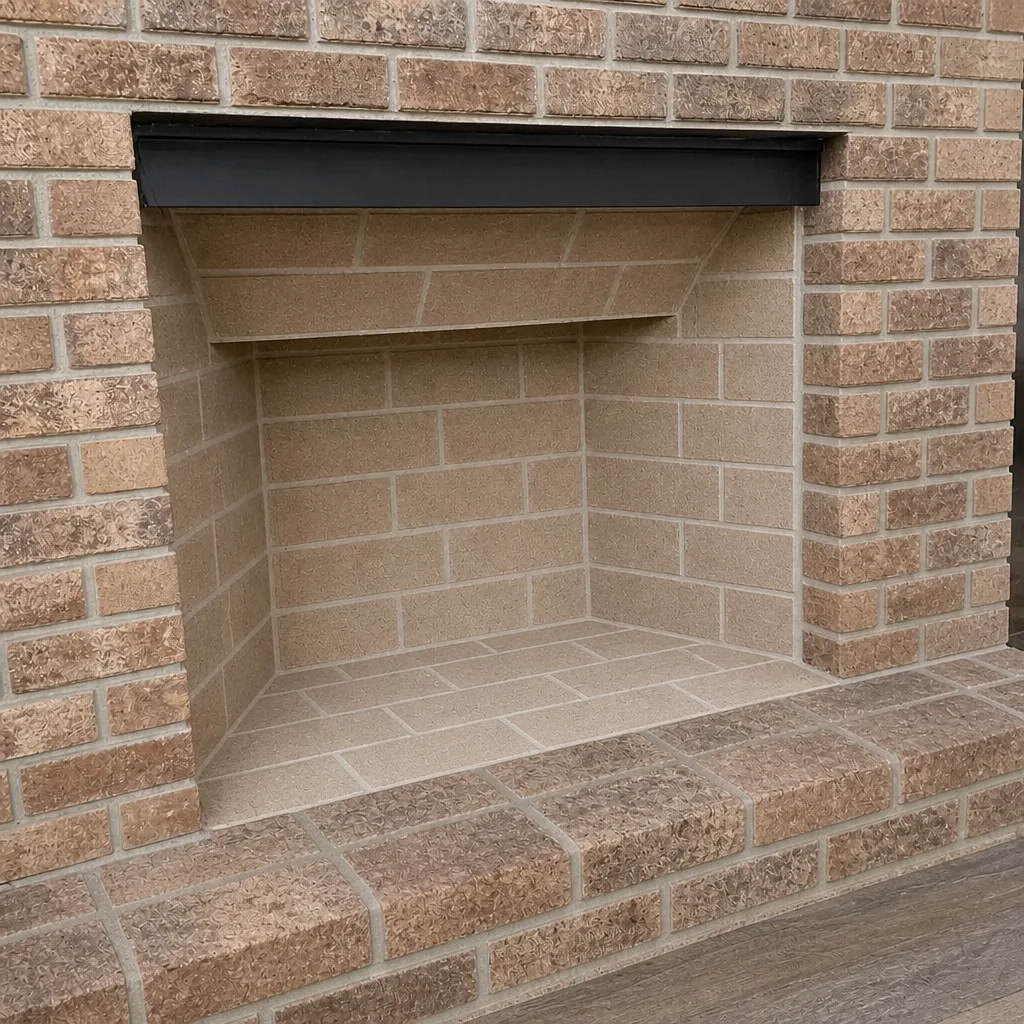
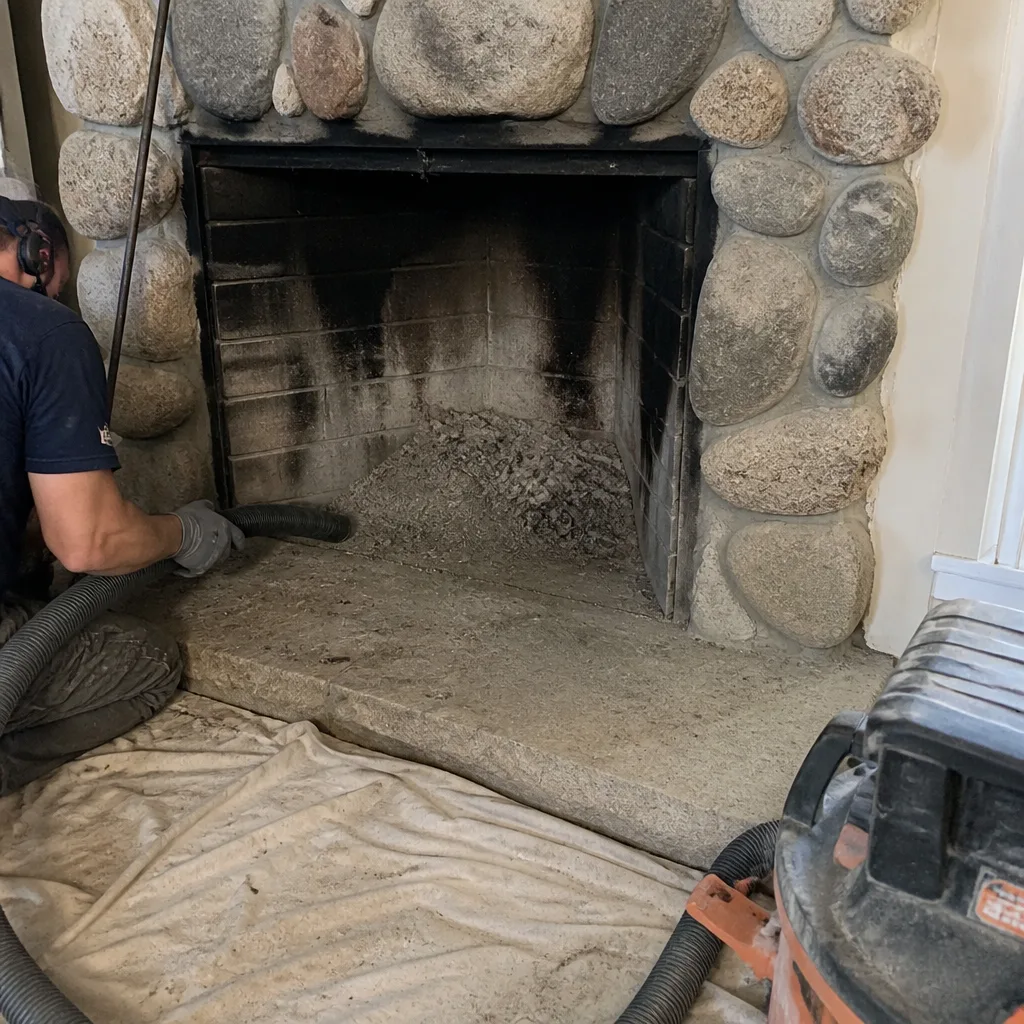
See the difference
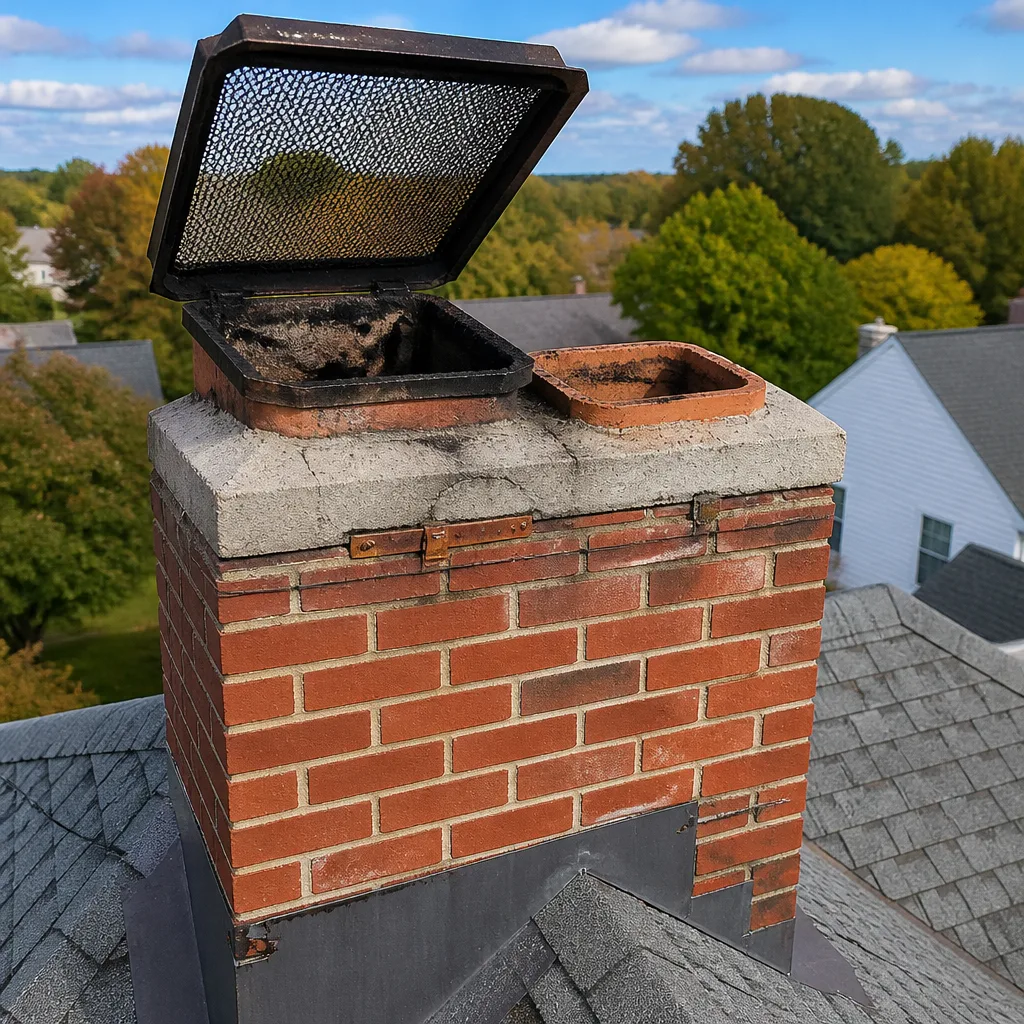
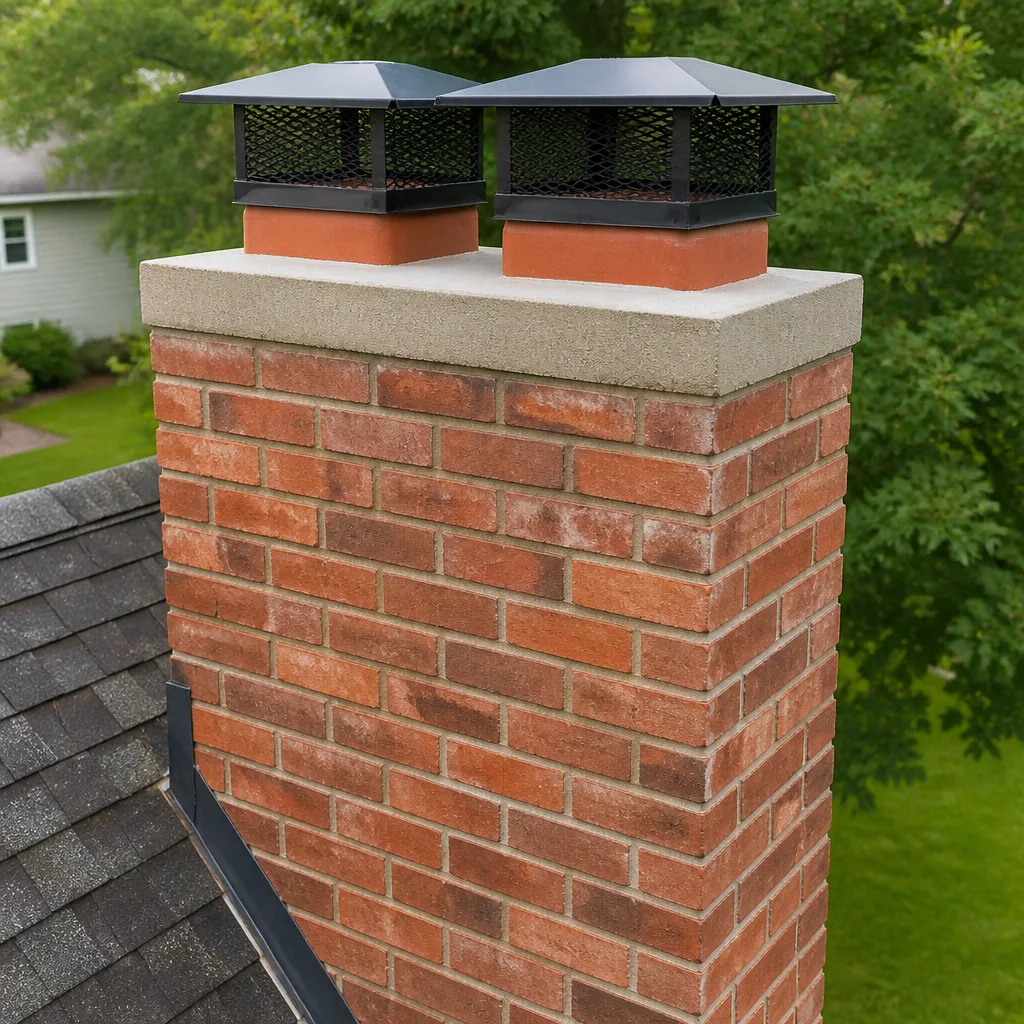
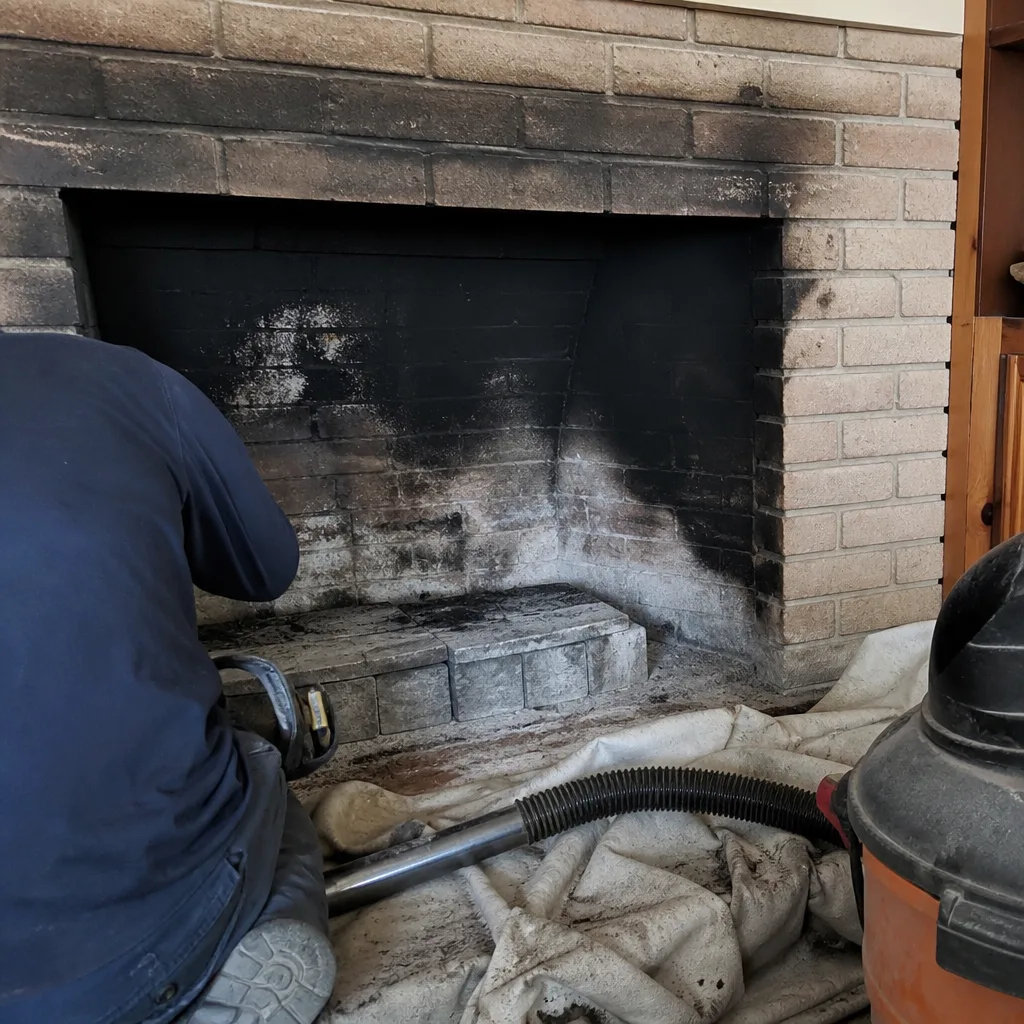 Before
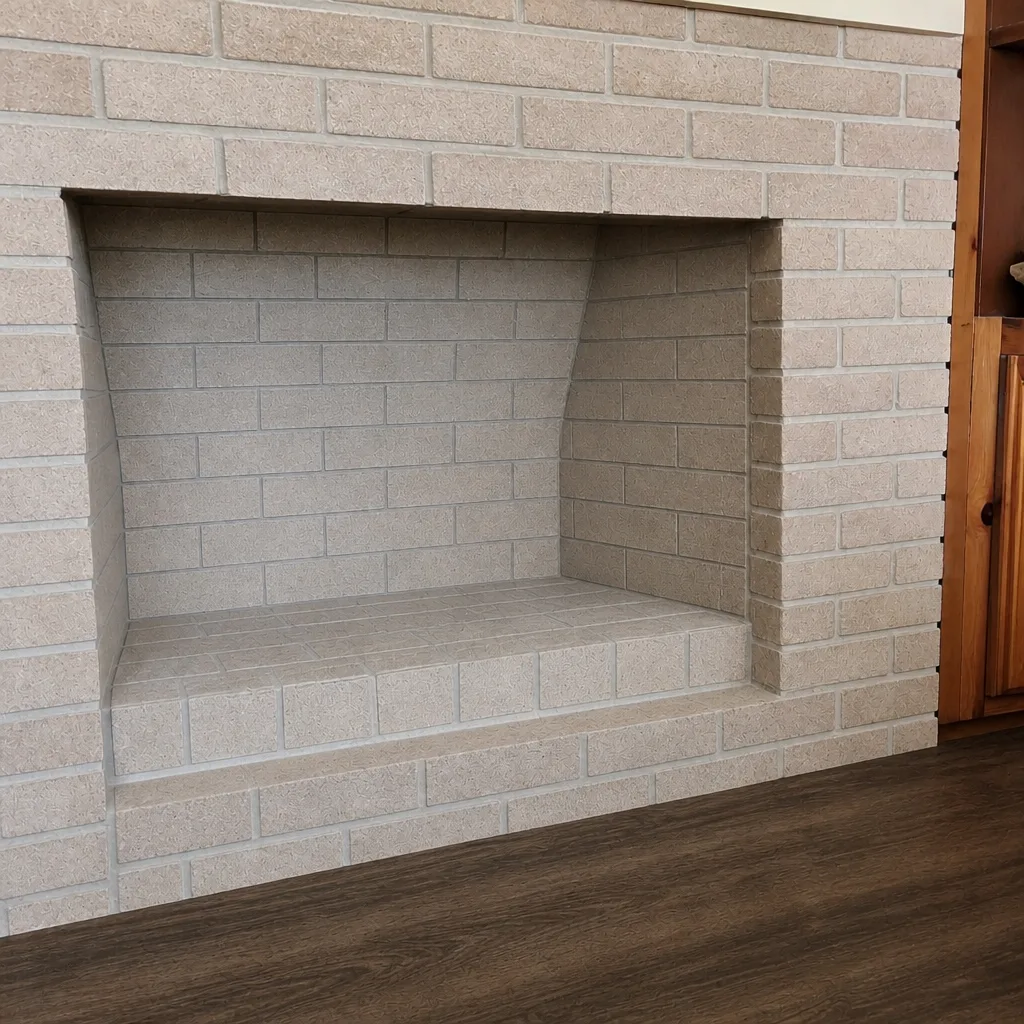 After
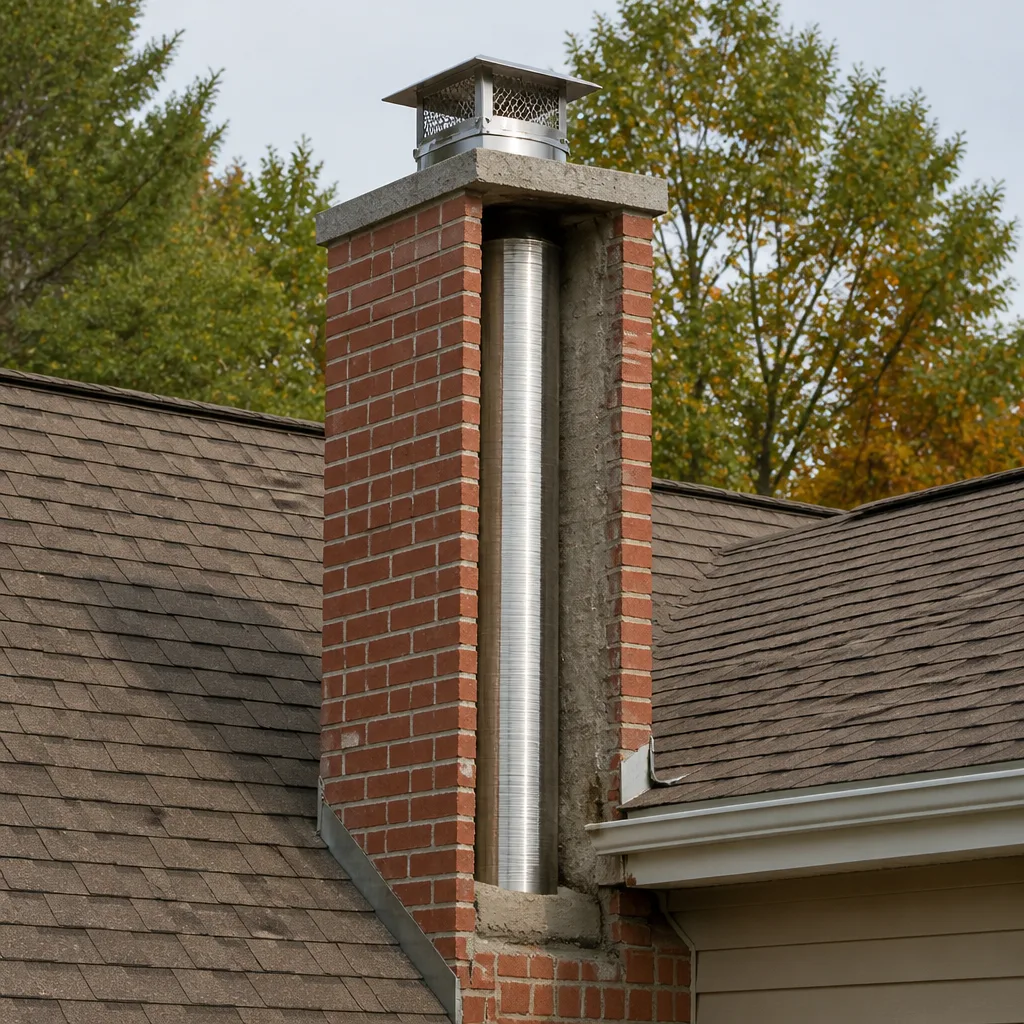
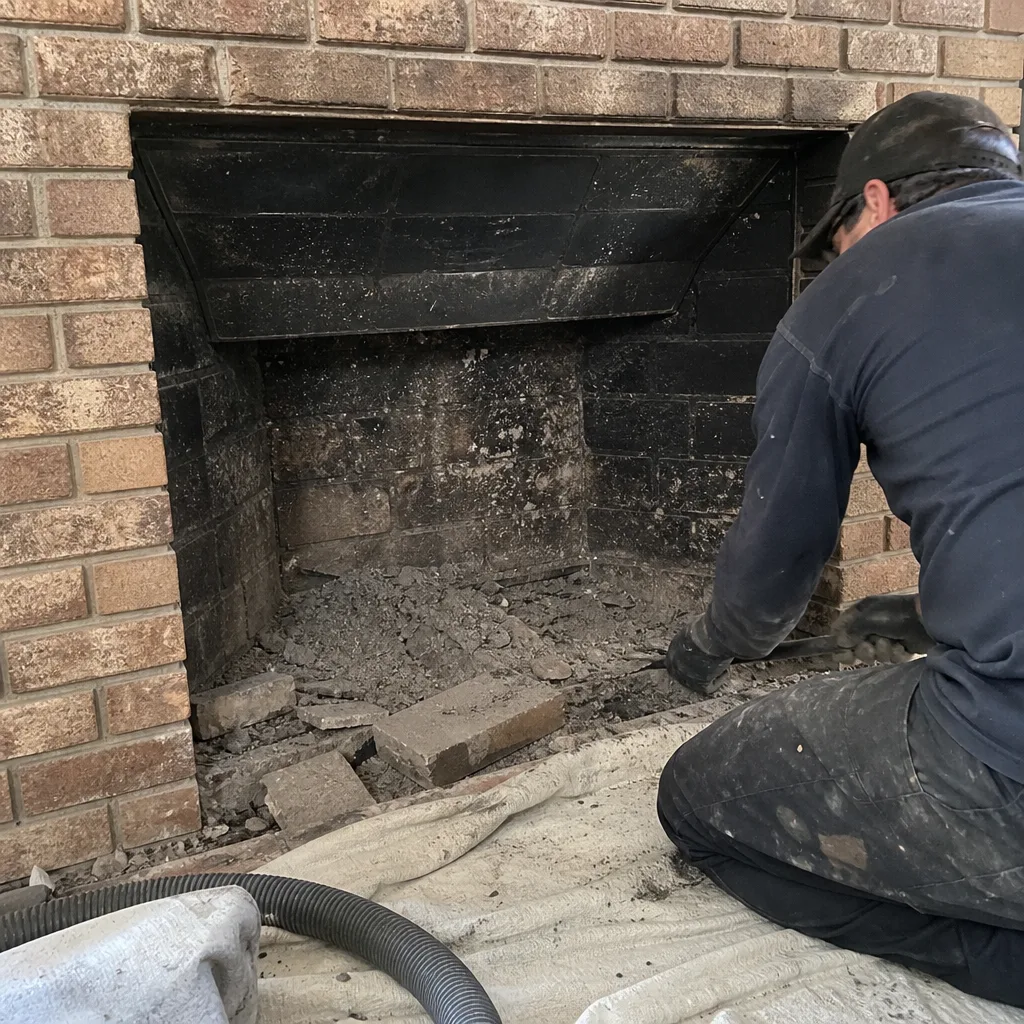 Before
 After
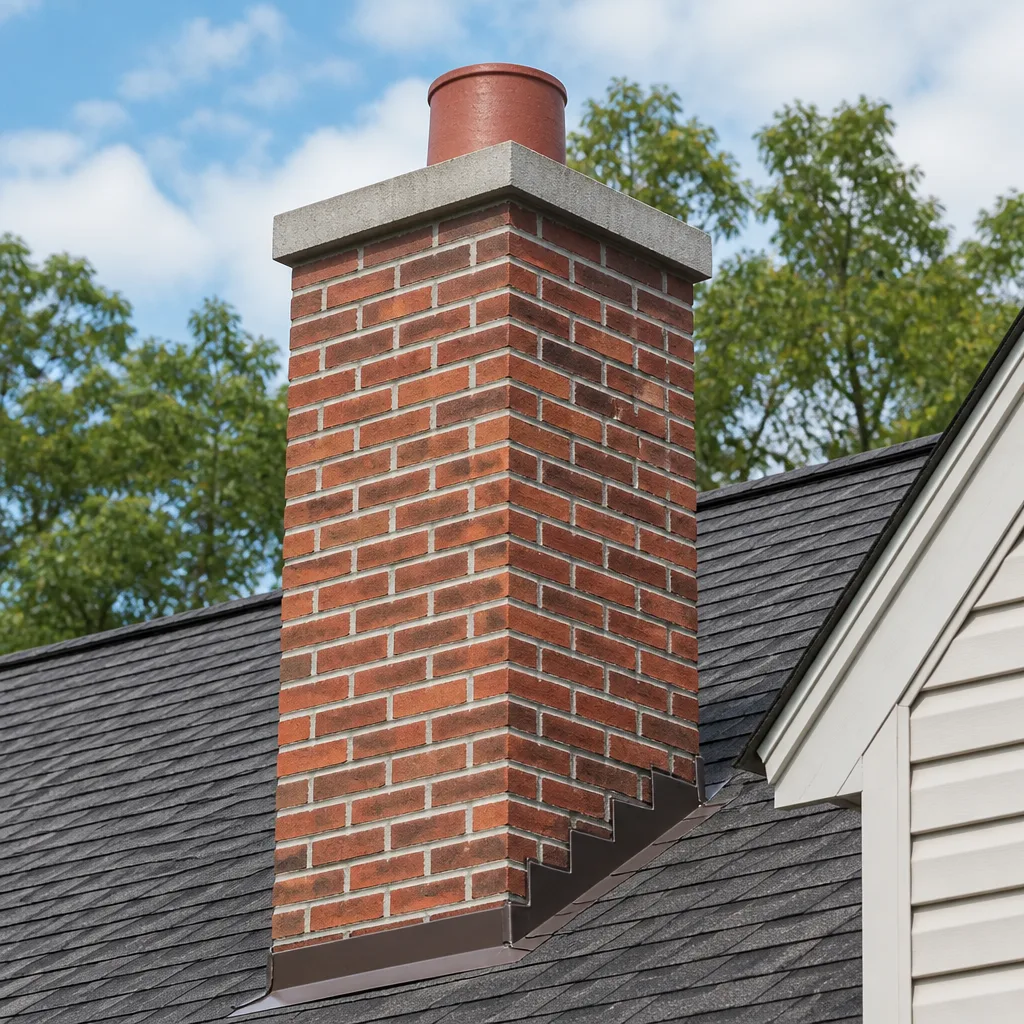
 Before
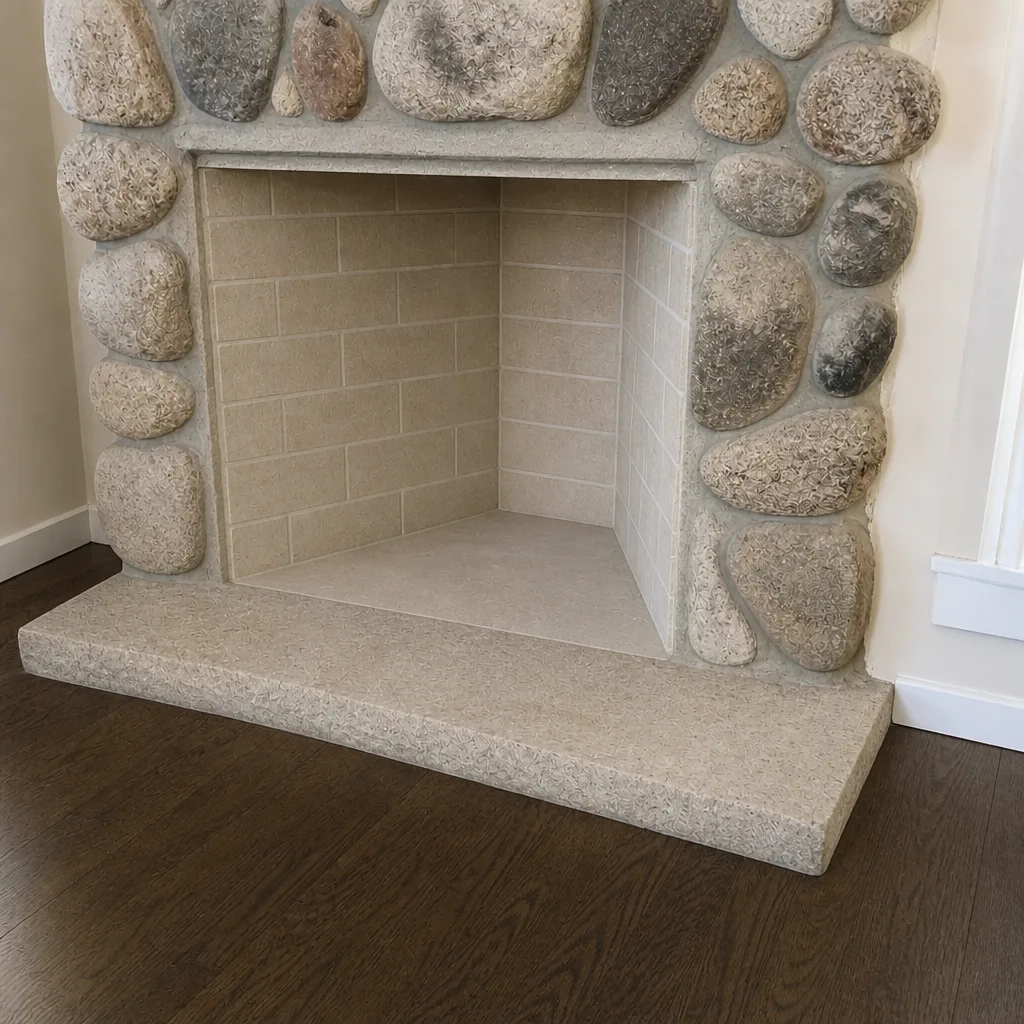 After
Common Mistakes to Avoid
- Treating the white haze on the glass as a cleaning problem. That haze comes from incomplete combustion and will return in weeks if the flue isn’t diagnosed. Sweep the glass and you’re just polishing the symptom.
- Hiring a generalist handyman to handle a chimney issue. Chimney work involves product knowledge a handyman rarely has: knowing when a flue needs HeatShield resurfacing versus a DuraFlex reline is not generic repair work. The wrong call here leads to premature failure and a bigger repair later.
- Letting a sweep company clean without inspecting. A sweep without a visual or camera inspection misses hundreds of small issues that show up on camera. If nobody shows you the view inside the flue, ask for it.
- Ignoring a sulfur smell because you can’t find it. The smell is telling you water is inside the chimney, and the damage continues every day the flue sits wet.
- Burning softwood or green wood freely in a Herriman winter flue. Herriman’s cold-season burn cycles plus wet wood equals faster creosote build. Seasoned hardwood burns cleaner and reduces how quickly the next sweep comes due.
- Replacing a cap with a hardware-store substitute. A Gelco or Famco cap sealed to manufacturer spec does a different job than a universal-fit cap. Olympia Chimney components are also worth asking about for compatibility with the existing flue.
- Waiting for the smell of smoke in the house before booking. The whole point of the signs in this guide is to catch the problem before you smell smoke in the living room.
If you’ve had a previous company find a problem and not solve it, that’s a familiar starting point for us. Our service menu covers sweep, inspection, fireplace repair, chimney repair and cap and crown installation, so a job doesn’t get handed off mid-project. A fireplace repair becomes a same-specialist decision, and a chimney repair is evaluated against the same inspection that found the problem.
When to Call a Professional
Call a professional once you’ve identified any of the urgent signs above, once a season if you burn regularly, or once you’ve noticed a problem and can’t identify the cause. If you’ve had a sweep in the past and came away unsure what was actually found, a full inspection with camera and photo report is the right call. If your home is on the market, an inspection now answers buyer questions before they’re raised. Chimney Sweep Herriman offers free estimates in Herriman, call (833) 508-9248. We answer 24/7, and fast dispatch from 7am to 7pm, Sunday through Friday. The local pro is licensed and insured as their state requires, and every job is priced by a written estimate agreed before booking.
Frequently Asked Questions
Chimney sweep pricing in Herriman depends on the flue configuration, the creosote level, and whether an inspection is bundled with the sweep. Call (833) 508-9248 for an exact quote, estimates are free, and the written estimate sets the final price.
Only if the inspection shows a genuine problem that resurfacing or repair can’t solve. A camera inspection of the flue is the deciding factor, and the technician should be able to show you the video before recommending anything. If a liner is needed, a DuraFlex reline is one of the options on the table. Call (833) 508-9248 to book an inspection.
Active fireplaces in Herriman are best swept and inspected once a year, generally before the heating season. Homes that burn most evenings through winter, or that burn softer or less-seasoned wood, may benefit from more frequent evaluation. Call (833) 508-9248 to schedule the next sweep.
Creosote keeps building in the flue, and at higher accumulation levels it can ignite at a lower temperature and start a chimney fire. Separately, a flue whose liner has been compromised by moisture can pass carbon monoxide into the home. Neither outcome is inevitable, but both are entirely preventable by booking the sweep. Call (833) 508-9248 for a free estimate.
A sulfur or rotten-egg smell from the flue means water has gotten into the chimney and is reacting with the liner or masonry, and it’s a stop-using-now sign. Book an inspection before lighting the next fire. Call (833) 508-9248 to book it.
You can brush a flue, but the sweep isn’t where most of the value sits. The inspection that catches a cracked tile, a failed crown, or a soft mortar joint is the part a homeowner can’t do alone, and those are the findings that matter most. Call (833) 508-9248 for a sweep and inspection together.
The Bottom Line
The early signs of a chimney problem are subtle, but they’re consistent: a smell that hangs around, a fire that struggles to start, glazed patches or rust inside the firebox, white bloom on the brick, cracks in the crown seen from the ground. Each sign maps to a specific mechanical cause, and each one points toward a specific repair rather than a generic service. Herriman’s cold nights and warm afternoons make the freeze-thaw cycle a real factor, which is why a seasonal walk-around with binoculars pays off. If you’re not sure whether a sign can wait, the safe answer is always to ask. Call (833) 508-9248 for a free estimate in Herriman and a written estimate before anything is booked. From sweep to repair, handled by one specialist, with professional-grade materials and an inspection before any recommendation.
For a full picture of what the sweep itself covers, start with Chimney Sweep Herriman and work outward from there.
Written by the team at Chimney Sweep Herriman.