
Last updated November 24, 2026
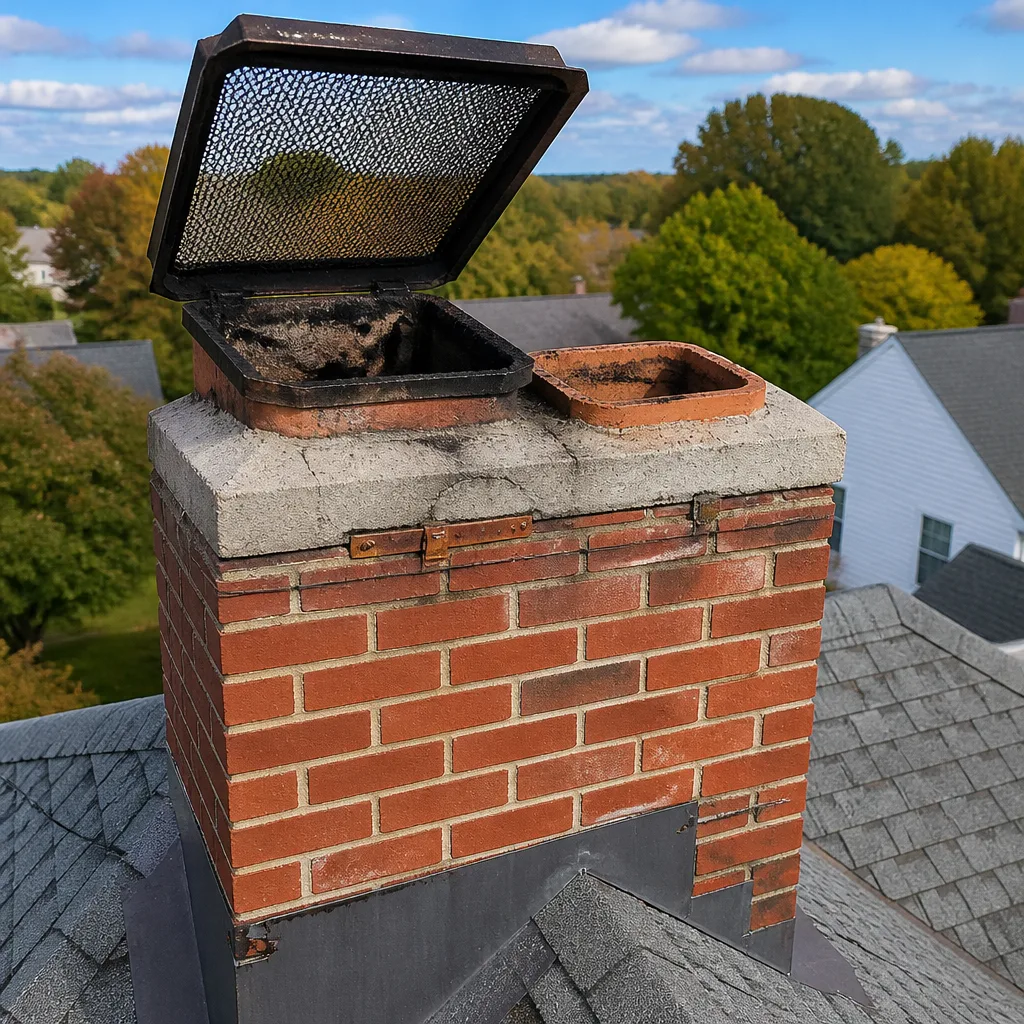 Sweep & inspection
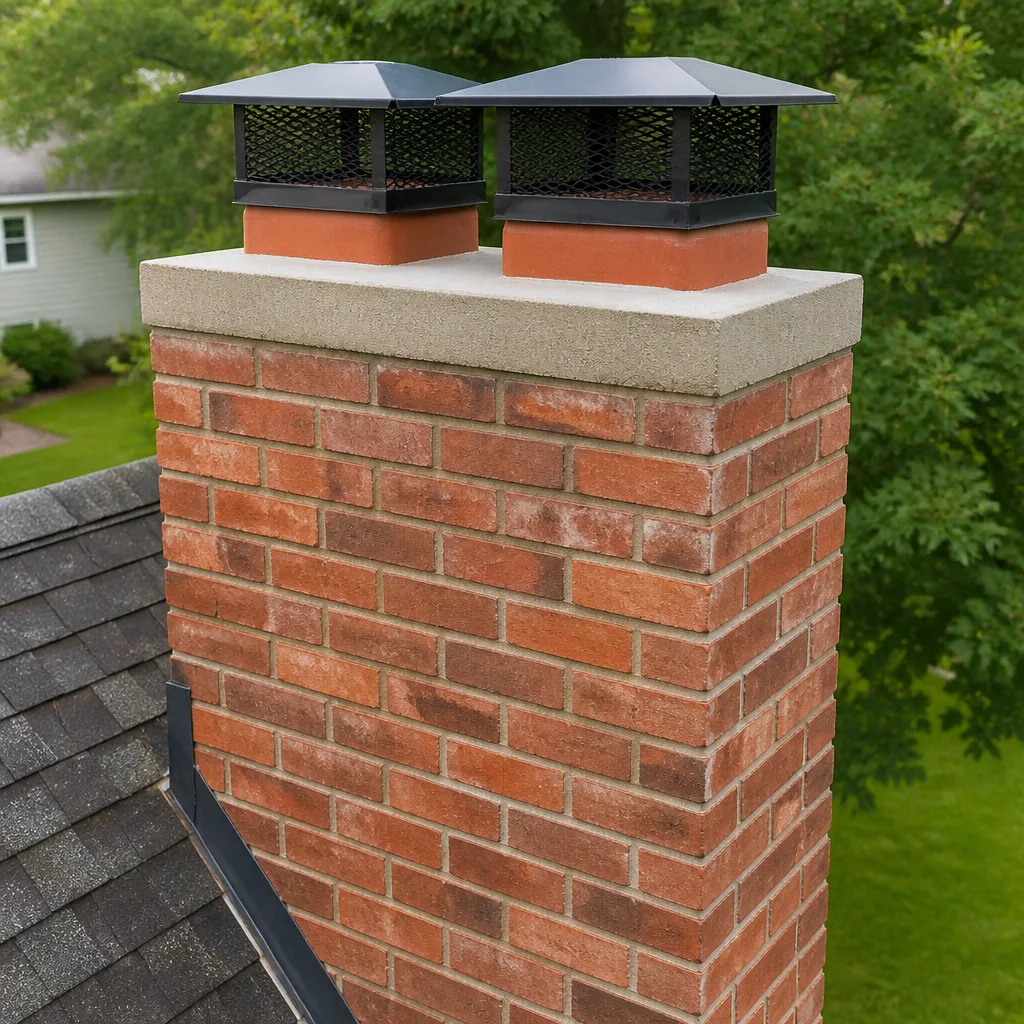 Caps & crowns
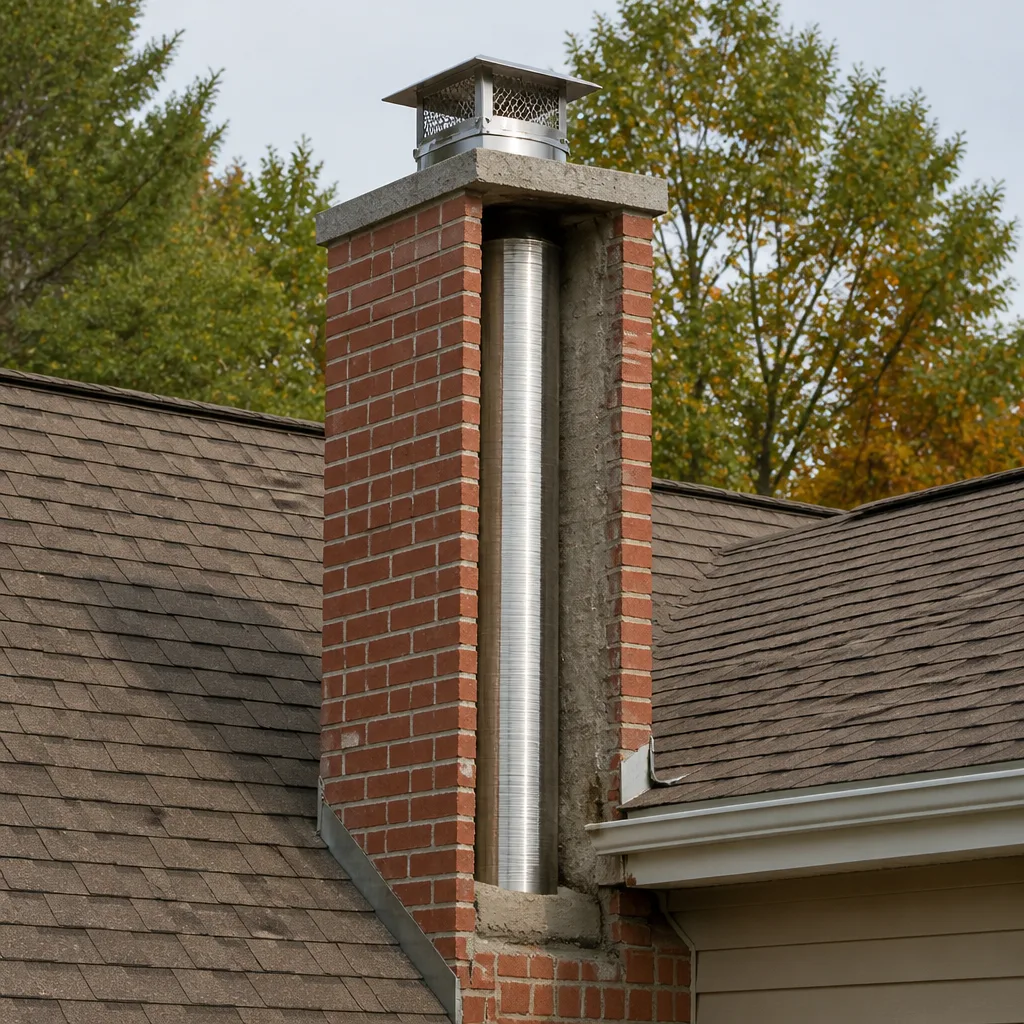 Flue relining
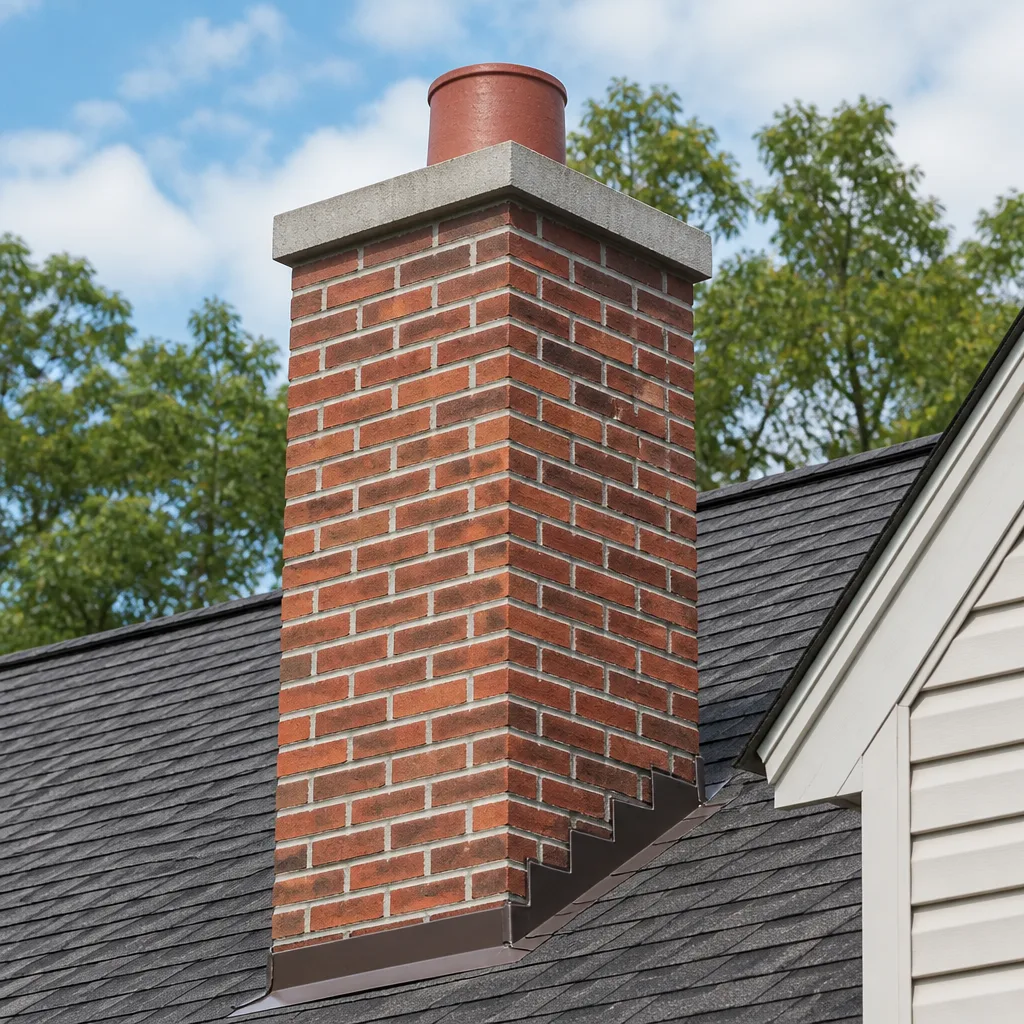 Masonry repair
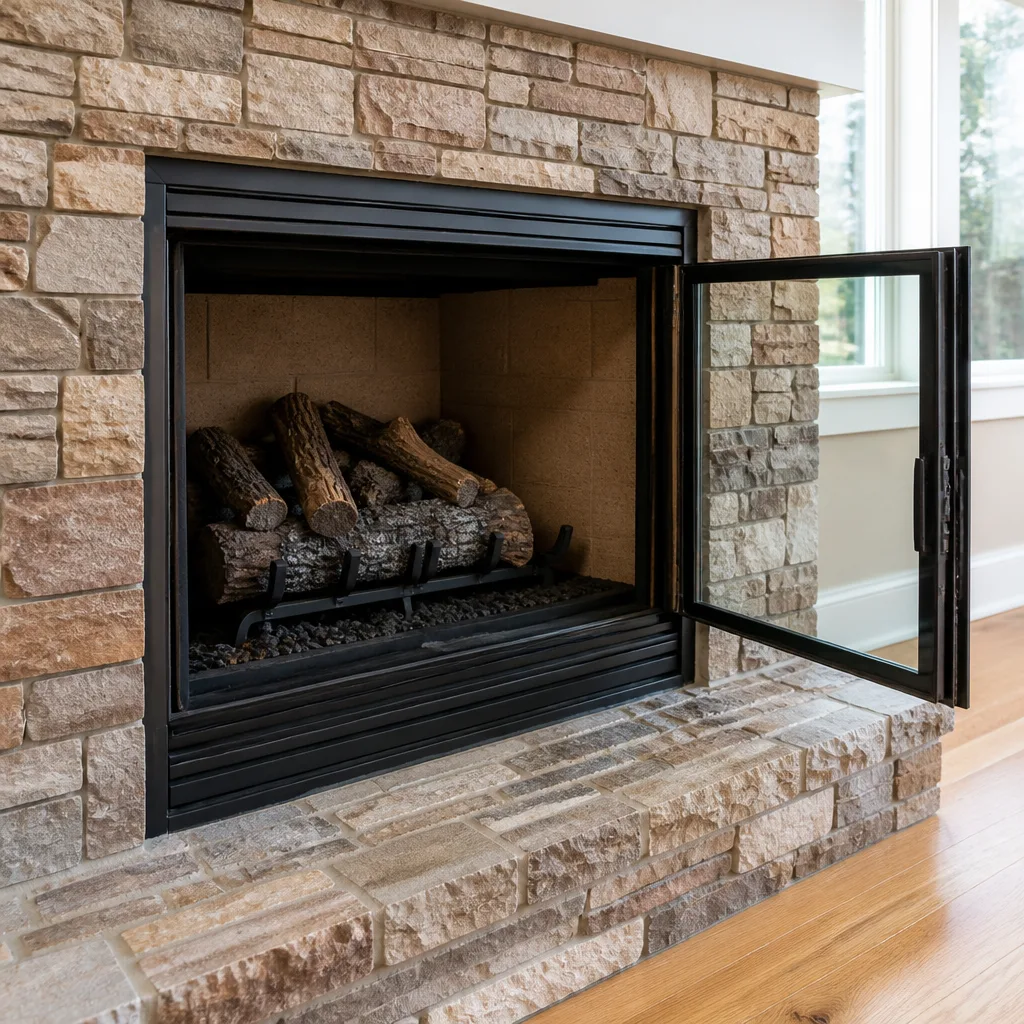 Gas fireplace service
Level 1 sweep and inspection to the NFPA 211 annual standard - flue, crown, cap, and flashing checked and photographed
Chimney sweep logs do not sweep chimneys. They loosen some creosote - which then falls where a brush and vacuum still have to collect it.
Chimney Sweep Troubleshooting in Herriman: Common Problems and How to Fix Them
If a technician shows up and immediately blames “negative air pressure” without looking at your cap, your damper, or the size of your flue, you’ve already paid for a guess. The truth is that most chimney complaints homeowners notice – smoke rolling into the room, a smell that won’t leave, a fire that sulks instead of burning – have a specific mechanical cause. And that cause can usually be narrowed down before anyone drives out. This guide maps the symptoms you’re seeing to the parts of a chimney that produce them, so when you do call someone in Herriman, you can describe the real problem instead of just the frustration.
Quick Answer
Most chimney problems in Herriman trace to one of five causes: a blocked or undersized flue, a failed damper seal, a missing or damaged cap, a cracked crown letting water in, or creosote buildup reducing draw. You can test for several of these yourself with a flashlight and a few minutes; the rest need a camera inspection to confirm. Match your symptom to the cause before you book anyone, and you’ll get a faster, more accurate diagnosis.
Styles & brands we work with
- Sweep & inspection
- Caps & crowns
- Flue relining
- Masonry repair
- Gas fireplace service
Table of Contents
- Backdraft vs. Downdraft: How to Tell Them Apart
- Why Herriman’s Altitude Changes How Your Chimney Draws
- Reading Odor Types as Diagnostic Signals
- How to Test Your Damper Seal Before Assuming the Worst
- Caps and Crowns: The Weather Side of Troubleshooting
- What You Can Safely Check vs. What Needs a Camera
- Symptom-to-Cause Quick Reference
- When to Call a Professional
Backdraft vs. Downdraft: How to Tell Them Apart
Backdraft and downdraft both blow smoke into your room, but they’re different problems with different fixes. Downdraft is a flow issue – outside air pushing down the flue because of wind, stack effect, or a nearby taller structure. Backdraft is a pressure issue – the house itself is pulling air down the chimney because something inside is competing for the air supply. If you fix the wrong one, you’ve spent money and the smoke stays.
The clearest way to tell them apart is when smoke enters the room.
- Smoke appears only when the fire starts, then clears. This is usually a cold-flue downdraft. The flue is full of cold, dense air that has to be warmed and pushed out before it will draw upward. You’re seeing the few seconds before the chimney “reverses.”
- Smoke appears consistently, no matter how hot the fire. Something is feeding the flue from above – a wind-driven downdraft across the chimney top, a missing or wrong-sized cap, or a neighboring roofline creating turbulence.
- Smoke appears when the furnace, kitchen exhaust, or bath fan runs. This is backdraft. The appliance is pulling air out of your house faster than your home can replace it, and the chimney becomes the easiest path for replacement air to come down.
- Smoke appears only on certain wind directions. Downdraft, almost always. A cap of the right height and style – a Gelco or Olympia Chimney model sized to your flue – often solves it outright.
Herriman homes on the east bench, where the wind comes over the ridge with more pace than down in the valley floor, are more prone to wind-induced downdraft than the number of calm days might suggest. We’ve found that a chimney that “works fine most of the time” in Herriman is usually describing a downdraft condition rather than a structural failure.
Why Herriman’s Altitude Changes How Your Chimney Draws
Herriman sits above 4,400 feet, and that number matters more than most homeowners realize. At altitude, the air is thinner and holds less oxygen per cubic foot. A fire draws in the same volume of air it always did, but that air contains fewer oxygen molecules, so combustion is less complete and the flue gases are cooler. Cooler gases rise more slowly. A chimney that draws beautifully at sea level can be borderline at Herriman’s elevation.
What that means in practical troubleshooting terms:
- Flue height matters more here. The rule of thumb for chimney termination is that the top should extend at least three feet above the highest point where it passes through the roof, and two feet above anything within ten feet. At altitude, pushing toward the taller end of that range helps draw noticeably.
- Flue sizing is less forgiving. A flue that’s too large for the appliance dissipates heat faster than the fire can produce it, and thin high-altitude air makes that worse. An oversized flue on a Herriman wood stove is a common culprit for chronic weak draft.
- Fireplace doors and dampers need to be open wider than you’d think. The appliance needs more air volume to get the same oxygen. If your fire place is temperamental, the first thing to try is opening the damper fully and cracking a nearby window for a minute.
- Creosote forms differently. Cooler flue gases condense more readily on flue walls. That means creosote accumulates faster in Herriman than the same stove would build at lower elevation, and annual inspections matter more, not less.
When we inspect a chimney in Herriman, altitude is part of the diagnostic checklist. A fireplace that works “OK” at 4,400 feet can be made to work properly with the right cap height, the right flue sizing, and a liner of correct diameter.
Reading Odor Types as Diagnostic Signals
The smell coming out of your fireplace is information. Different odors point to different problems, and once you can name the odor, you’ve narrowed the diagnosis considerably. If you’ve had someone out who couldn’t tell you why the smell was there, this is usually why – the smell itself is the clue.
- Sharp, acrid, tarlike smell in warm weather. This is creosote. It’s the residue left by wood smoke, and on warm humid days the flue reverses and pushes the smell into the house. It’s a strong signal that the flue needs a chimney sweep before the next burn season, not necessarily a repair.
- Musty, damp, earthy smell. Masonry decay or moisture intrusion. Water has found its way into the flue or crown and is breaking down the masonry. This one needs inspection before it gets worse – see the crown section below.
- Ammonia-like or animal smell, often strongest in spring or fall. Animal intrusion. Birds, squirrels, and raccoons use chimneys as shelter in Herriman, particularly when the cap is missing or damaged. A proper cap of the right size – a Famco or Olympia Chimney model – is the fix, but the flue needs to be checked and cleaned first.
- Smoky smell with no visible smoke. Often a damper that isn’t fully closing, or a fireplace that leaks a small amount of smoke on cold starts. Test the damper seal next.
- Chemical or unusual smell with a gas appliance nearby. Stop and call a professional. Do not troubleshoot this yourself.
If you can describe the smell to us – “tar-like,” “musty,” “like something died” – we can often narrow the cause before we arrive. That saves a diagnostic trip and gets you to the right fireplace repair faster.
How to Test Your Damper Seal Before Assuming the Worst
Before you assume your liner or cap is failing, check the damper. A damper that doesn’t seal is the single most common cause of a fireplace that leaks smoke or smell when it isn’t in use, and it’s often mistaken for a much larger problem. The test takes five minutes.
- Wait for the fire to be fully out. At least a day, longer if the firebox is thick with ash. Never reach into a firebox that might still be warm.
- Open the damper and shine a flashlight up the flue. Look for the flat metal plate at the throat. Confirm it’s opening and closing smoothly with the handle.
- Close the damper fully and look for daylight. With the firebox dark, shine the flashlight around the closed damper plate. Any visible gap or light means the damper isn’t sealing.
- Check with a paper test. With the fireplace cold and the damper closed, hold a tissue near the fireplace opening on a windy day. If it flutters inward, air is moving past the damper.
- Look at the damper itself for rust or warping. Heavy rust, a warped plate, or a hinge that’s seized means the seal is gone.
A worn damper is a straightforward fireplace repair job. What matters is not confusing it with a liner issue, a cap issue, or a masonry issue, any of which is a bigger and more expensive project. Confirm the damper before you spend money on a reline.
One safety note: don’t try to remove or replace the damper yourself. The damper sits at the top of the firebox, sometimes above a smoke shelf, and reaching into that space risks contact with the flue collar, creosote deposits, and metal edges. Let a technician handle the removal and replacement with the right tools.
Caps and Crowns: The Weather Side of Troubleshooting
Your chimney’s two weatherproofing components – the cap on top and the crown that covers the chimney’s top edge – take the most wear from Herriman’s weather. They’re also the components most often missed by generalist technicians who focus on the sweep but not the shell around it. If you’ve had a previous company find a problem but not solve it, the cap and crown are where the gap usually appears.
The cap
The chimney cap does three things: keeps rain and snow out of the flue, keeps animals out, and improves draft by keeping wind from pushing down the chimney. A missing cap is the most common cause of both animal intrusion and accelerated flue deterioration. A wrong-sized cap can actually make downdraft worse – the mesh is too fine for the flue, or the cap is too short to shield the outlet from wind. Gelco and Olympia Chimney caps are manufactured in the sizes and styles that match modern flues; a properly specified cap of that type eliminates most wind-driven downdraft.
Cap work is included in-house with our service. If we sweep the chimney and see a failed or missing cap, we can specify and install the replacement on the same visit rather than handing you to a second contractor.
The crown
The crown is the concrete or mortar cap around the top of the chimney, with a slight slope to shed water away from the flue. When it cracks, water gets into the masonry below the roofline, and that’s where the “musty smell” and the slow flue deterioration start. If your crown is cracked, it isn’t a cosmetic issue – water migrating into brick and mortar is the leading cause of structural chimney problems over time.
A HeatShield application is one option for resurfacing the interior of a damaged flue. Crown repairs are typically done with masonry or a specialized crown product. Either way, both are done in-house here, with the same chimney repair scope from inspection to final finish.
What You Can Safely Check vs. What Needs a Camera
Some chimney troubleshooting is within reach for a careful homeowner with a flashlight. Some of it requires a camera inspection to confirm. Knowing which is which saves you both time and money – and keeps you out of the risky areas.
What you can check yourself
- Exterior visual check from the ground. Binoculars and a walk-around on a dry day. Look for a missing or damaged cap, a visibly cracked crown, missing mortar joints, or vegetation growing out of the chimney.
- Damper seal test as described above.
- Odor identification – the smell itself is a diagnostic signal you can name.
- When smoke enters the room – cold start vs. hot fire vs. appliance running – tells you which kind of draft problem you have.
- Ash and soot distribution around the firebox – heavy soot on one side only can indicate a flue or damper issue.
- Fire behavior – a smoky fire, a fire that goes out overnight, or visible smoke curling back into the room at start-up are all things to note and describe to a technician.
What needs a camera inspection to confirm
- Flue interior condition. Cracks, gaps in the flue tile joints, and early-stage glazed creosote are invisible from the firebox. A camera scan is how a genuinely needed reline gets confirmed – and how a reline gets ruled out.
- Flue size and offset. Whether the flue is properly sized for the appliance, or has an offset or transition that’s restricting draw.
- Creosote depth and type. Stage 2 is different from stage 3 glazed creosote and the two require different treatments.
- Damper and smoke shelf condition from inside. Confirms whether the damper seal test you ran was accurate.
- Animal intrusion and nesting. A camera confirms what’s in the flue and whether anything has damaged the liner.
- HeatShield or liner installation readiness. A thorough inspection determines what’s needed before either service is recommended.
One hard rule: do not go on the roof to check it yourself, especially in winter. A roof walk on a Herriman home is a height and fall hazard, and one slip can turn a chimney problem into a medical emergency. The three minutes you think you’ll save aren’t worth it.
If a company tells you that you need a reline before they’ve run a camera, that’s a red flag. The recommendation isn’t real until the evidence is. We inspect before we recommend. You see the camera footage yourself; if the flue is fine, we tell you so and there’s no repair needed.
Symptom-to-Cause Quick Reference
Use this as a starting map. Match the symptom you’re seeing to the likely cause, then use the section below to narrow the fix. If more than one applies, start with the cheapest and simplest to rule out – often the damper or cap – before moving toward the liner or masonry.
- Smoke on every fire, hot or cold: cap height, cap mesh, or flue termination geometry. Likely downdraft.
- Smoke only on cold starts: cold flue. Pre-warm the flue with a rolled newspaper torch before lighting. If it continues on every cold start, check cap and flue height.
- Smoke when the furnace or exhaust fans run: backdraft. Pressure in the house is competing with the chimney. Confirm with a technician.
- Smoke on certain wind directions: downdraft. Cap angle and height.
- Musty smell after rain: cracked crown or missing cap letting water in.
- Acrid, tarlike smell in summer: creosote buildup in the flue; the flue reverses on warm days. Sweep before next burn season.
- Animal smell and scratching sounds: missing or damaged cap. Do not light a fire until the flue has been checked.
- Weak draw with no smoke: oversized flue, partial flue obstruction, or damper not fully open. Test damper first, then camera inspection.
- Visible soot on the mantel or wall above the firebox: backdraft, cracked firebox panel, or wrong-sized liner. Needs prompt diagnosis.
- Water in the firebox: cap, crown, or flashing failure. Diagnose from the top down.
The pattern in Herriman is that backdraft, downdraft, and animal intrusion in a failing cap tend to present as one problem when they’re actually two or three. A thorough inspection separates them. See our main Chimney Sweep Herriman page for how the sweep and inspection fit together.
A Sweep and an Inspection Are Not the Same Thing
A chimney sweep cleans the flue. An inspection evaluates the whole system – flue, firebox, damper, cap, crown, and the appliance connection – and produces a written report. These are two different services with two different purposes, and knowing which one you need saves you from paying for one when you needed the other.
When a sweep is what you need
- The fire has been burning normally and hasn’t backdrafted.
- The last sweep is more than a year old, or more than a cord of wood ago.
- There’s visible soot or creosote buildup at the firebox.
- You’re preparing for the burn season and want the flue cleared before use.
- You burn regularly and can’t remember the last time the flue was cleaned.
When an inspection is what you need
- Symptoms exist: smoke in the room, musty smell, animal sounds.
- You’re buying or selling a home in Herriman and need documentation for the transaction.
- You’re preparing to burn for the first time in a new home.
- You’ve had work done elsewhere and want the flue confirmed.
- You’re considering a liner or HeatShield application and need to confirm whether either is actually necessary.
- You want a written baseline condition of the chimney before any decision.
Inspection is its own named service on our menu, not an upsell tacked on after the sweep. When you book a sweep, we can tell you at the time if an inspection makes sense for what you’ve described. When you book just an inspection, we don’t assume a sweep is needed – we report what we saw, send you the footage, and let you decide what to book next.
Common Mistakes to Avoid
- Blaming everything on negative air pressure. Pressure issues are real, but they account for maybe a third of the smoke-in-the-room complaints we see. Confirming the cap, damper, and flue size first is what separates a diagnosis from a guess.
- Skipping the sweep and going straight to a reline. A reline is a significant job and only warranted when the inspection proves it. If a company recommends a reline before running a camera, get a second opinion.
- Adding a cap without checking flue height. A cap on a chimney that terminates too low for Herriman’s ridge wind can actually make downdraft worse. Cap and height are a matched pair.
- Ignoring a musty smell in spring. That’s usually a cracked crown or missing cap letting water in. The smell is the smallest symptom; the masonry damage behind it gets expensive.
- Reaching into the firebox to inspect the damper yourself. Reaching into a firebox can encounter creosote deposits, sharp metal, and the smoke shelf – all of which are best left to a technician with the right tools.
- Using generic hardware-store caps and adapters. Factory caps from Gelco, Olympia Chimney, and Famco are manufactured to the flue dimensions they’re sold as. Adapters and universal-fit caps are where most draft complaints we see in Herriman start.
- Burning unseasoned wood in Herriman’s altitude. Wet wood at 4,400 feet can’t produce the flue temperature needed to drive a proper draw, and the cooler gases condense into creosote faster. Dry, seasoned wood is the cheapest upgrade to a chimney’s performance.
When to Call a Professional
Some issues genuinely need a professional. Call when smoke enters the room every time the fire is lit, when smoke enters the room specifically when an exhaust fan or furnace runs, when you smell ammonia or hear animal sounds from the flue, when the firebox shows water, when your crown is visibly cracked, or when the last time the chimney was swept is unknown and you’re about to start burning. Also call if you’ve had a previous technician tell you that a reline or a big repair was needed, and you want the diagnosis confirmed with camera footage you can see.
Chimney Sweep Herriman offers free estimates in Herriman – call (833) 508-9248. We answer 24/7. Fast dispatch from 7am to 7pm, Sunday through Friday. Our technicians have up to 15 years of experience, and we work with professional-grade materials including DuraFlex liners, HeatShield resurfacing, and Olympia Chimney components. We inspect before we recommend, and we say plainly when work can safely wait.
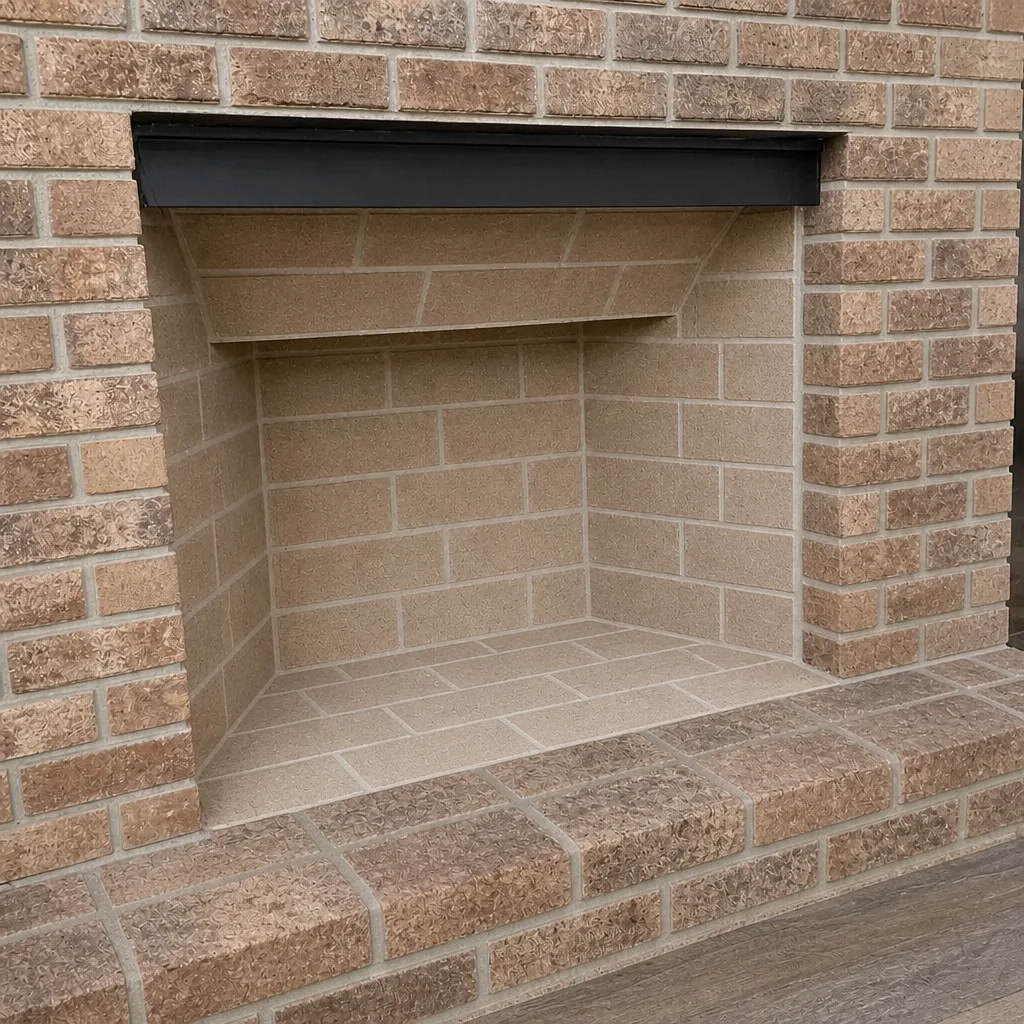
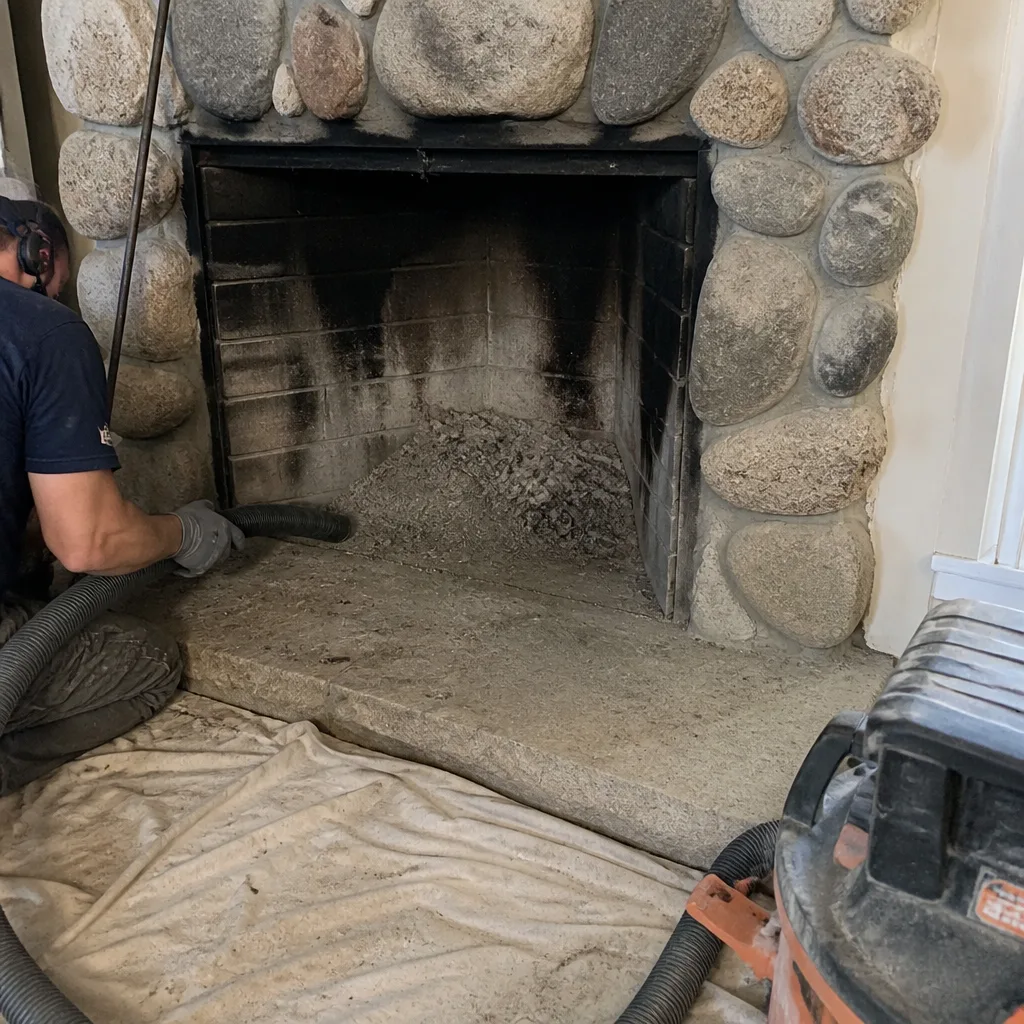
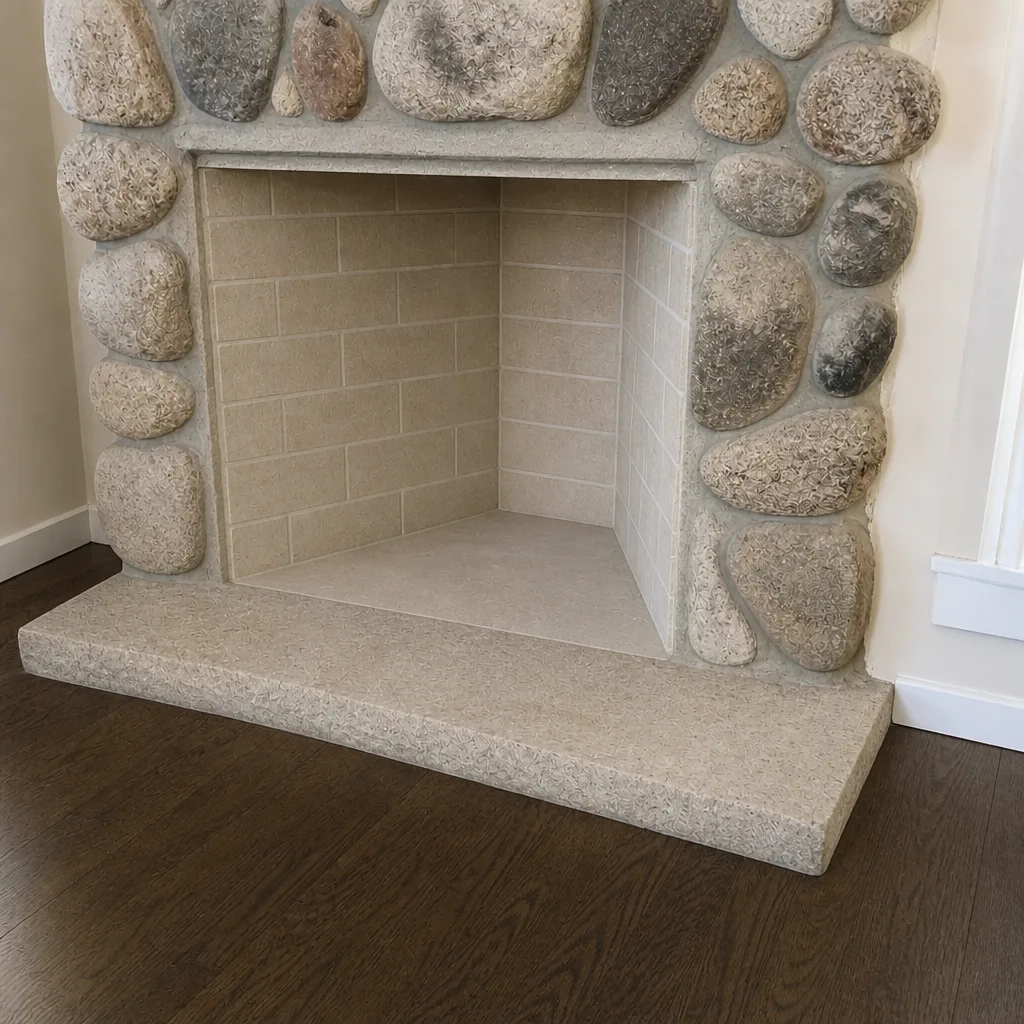
See the difference
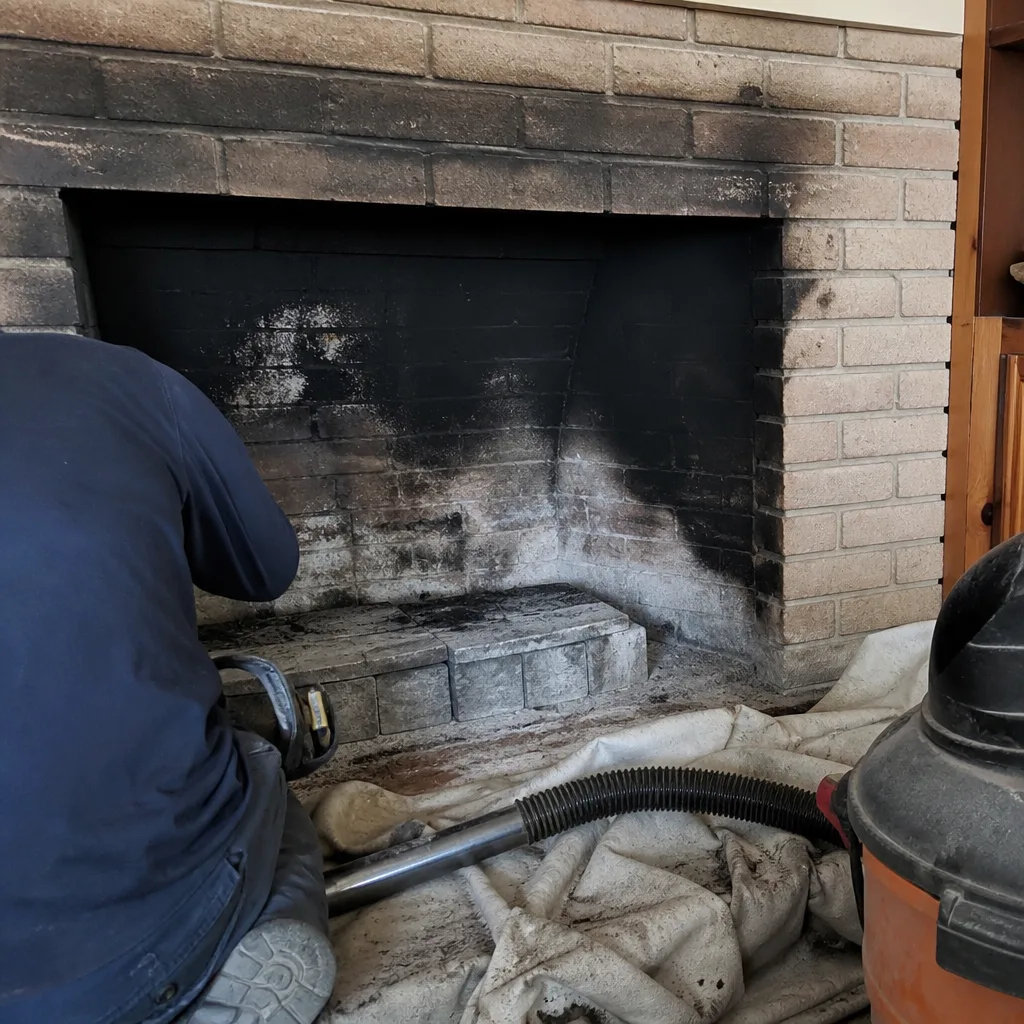 Before
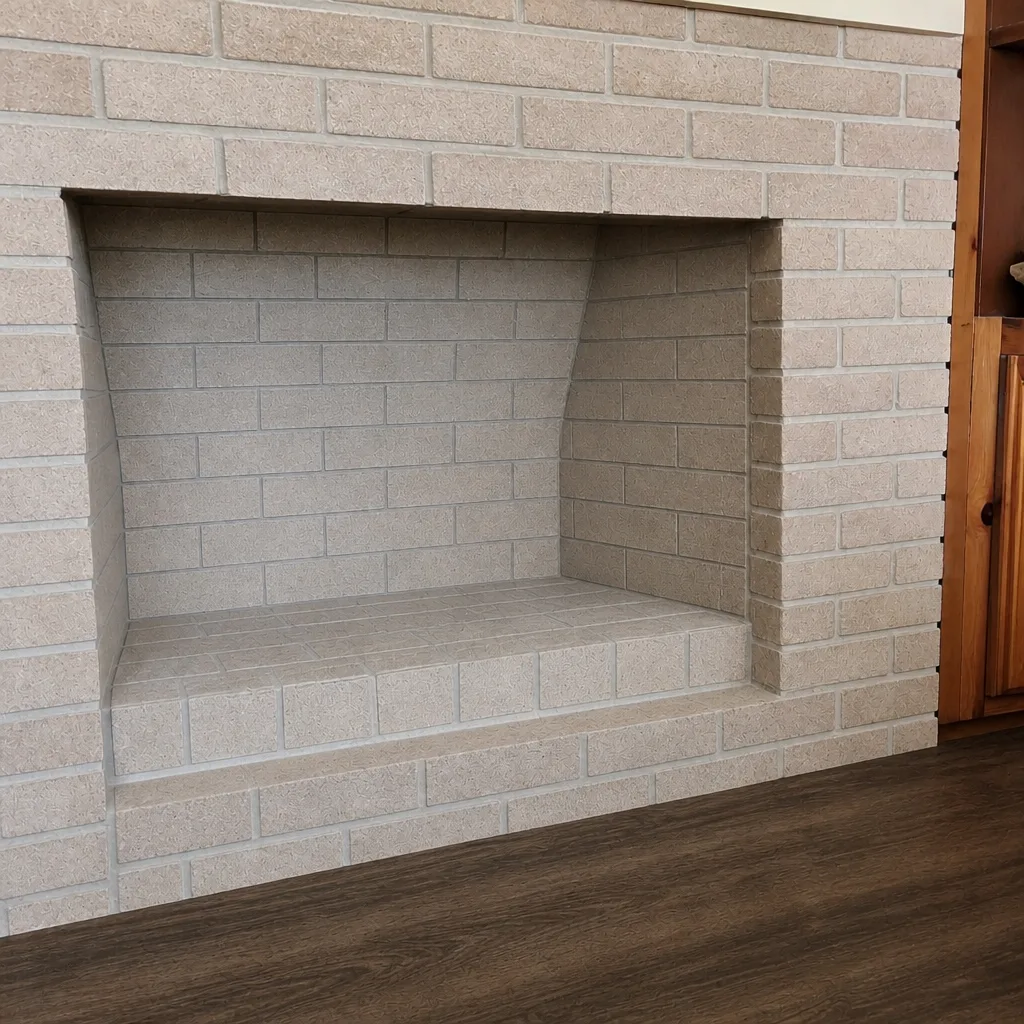 After
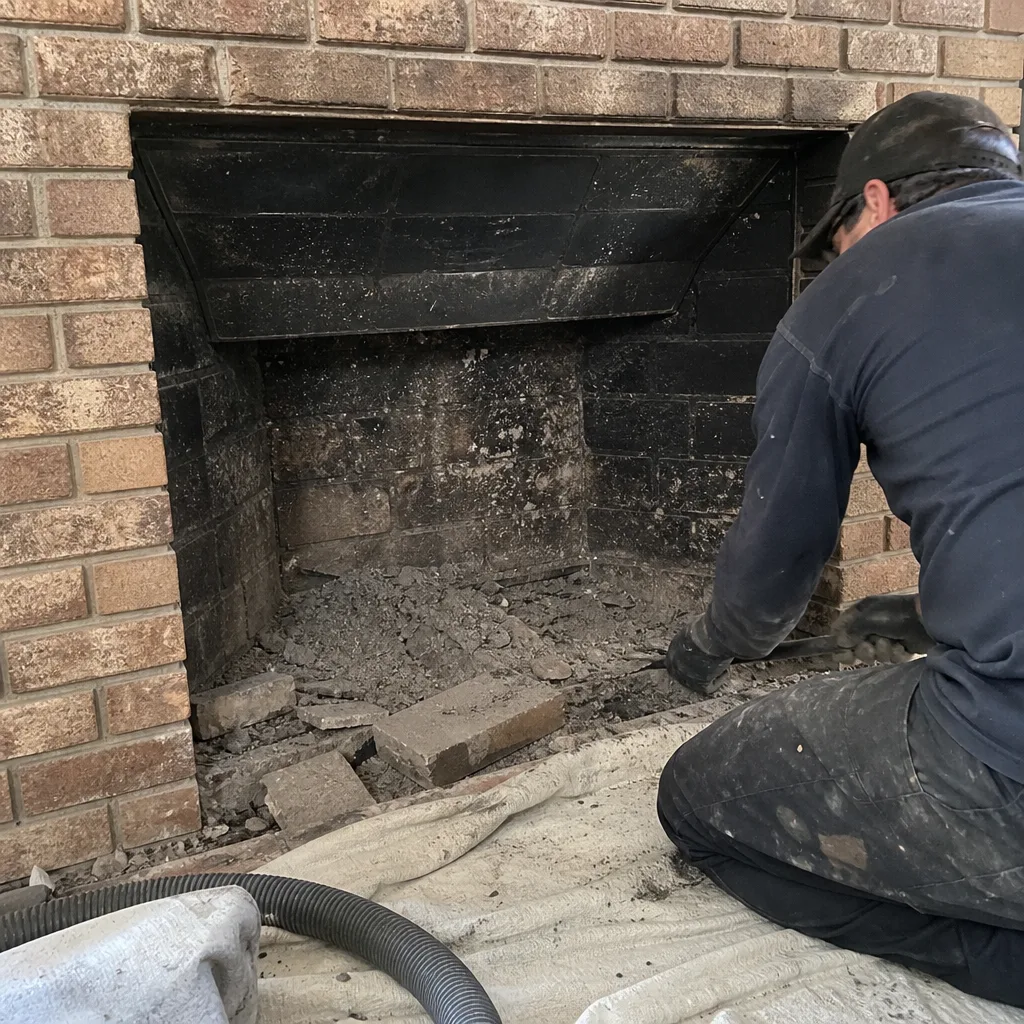 Before
 After
 Before
 After
Frequently Asked Questions
A chimney used for wood burning should be swept once a year, or after about a cord of wood, whichever comes first. Herriman’s higher elevation means flue gases cool a bit faster and creosote condenses a bit sooner, so annual is the right baseline here rather than a multi-year interval. If you’re new to a home and don’t know the last sweep date, book one before the burn season starts. Call (833) 508-9248 for an exact quote – estimates are free.
Downdraft is outside air pushing down the flue – usually wind, stack effect, or a neighboring taller structure. Backdraft is your house pulling air down the flue because something inside is competing for the air supply, like a furnace or exhaust fan. The tell is when smoke enters the room: on cold starts and certain winds means downdraft; when appliances run means backdraft. Each fix is different, so know which one before booking. Call (833) 508-9248 to talk through your symptom.
Only if the camera inspection proves it – a cracked flue tile, a gap in the liner joint, or failed masonry can all be seen on camera, and a proper inspection produces footage you can review. If the flue is intact and correctly sized, a liner is not needed, and we’ll say so. DuraFlex liners are what we install when a liner genuinely is required. Call (833) 508-9248 for an exact quote – estimates are free.
That’s almost always creosote in the flue, reversing on warm humid days when the fire isn’t being used. The house is warmer than the flue, so outside air pushes down, carrying the smell with it. A sweep usually resolves it, but the sweep should happen before the next burning season starts. Call (833) 508-9248 for an exact quote – estimates are free.
Yes, and there’s real value in doing so. You can do an exterior visual check from the ground, test the damper seal with a flashlight, and identify the smell. What you cannot safely do is climb onto the roof or reach into the firebox – both are hazards, and the flue interior needs a camera scan to confirm condition. Call (833) 508-9248 to book an inspection with footage you can review.
Animals sound like movement or scratching, especially in the early morning and evening, and often carry an ammonia-like smell. Draft issues don’t produce those sounds or that smell. Do not light a fire until the flue has been checked – a bird’s nest in the flue is a real fire hazard. Call (833) 508-9248 for the right diagnosis.
The Bottom Line
Most chimney symptoms have a mechanical cause you can name: downdraft from the cap and chimney termination height, backdraft from pressure competition, a failed damper seal, a cracked crown letting water in, animal intrusion from a missing cap, or creosote loading the flue. Herriman’s 4,400-foot altitude tilts the diagnosis toward flue height, flue sizing, and creosote buildup sooner than at lower elevations. You can check the exterior, the damper, and the smell yourself. Camera footage is what confirms the rest, and no reputable company recommends a reline before running one. Name your symptom, book the right service, and know what you’re paying for before anything starts.
If you’d rather have a specialist look at it, call Chimney Sweep Herriman at (833) 508-9248 for a free estimate. We answer 24/7. Fast dispatch from 7am to 7pm, Sunday through Friday.
Written by the team at Chimney Sweep Herriman.