
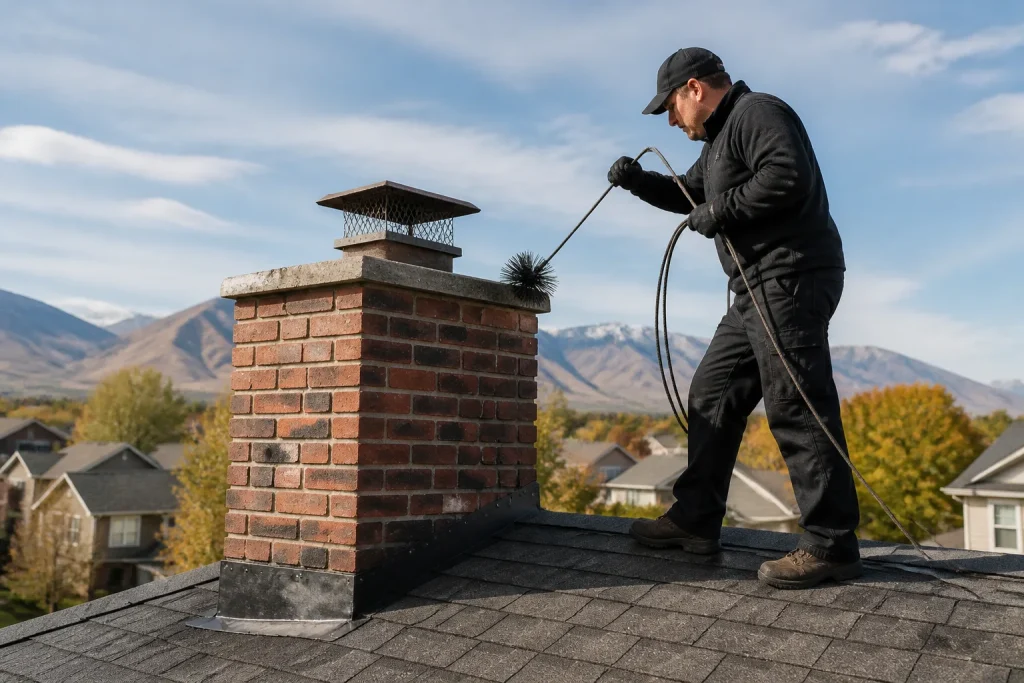
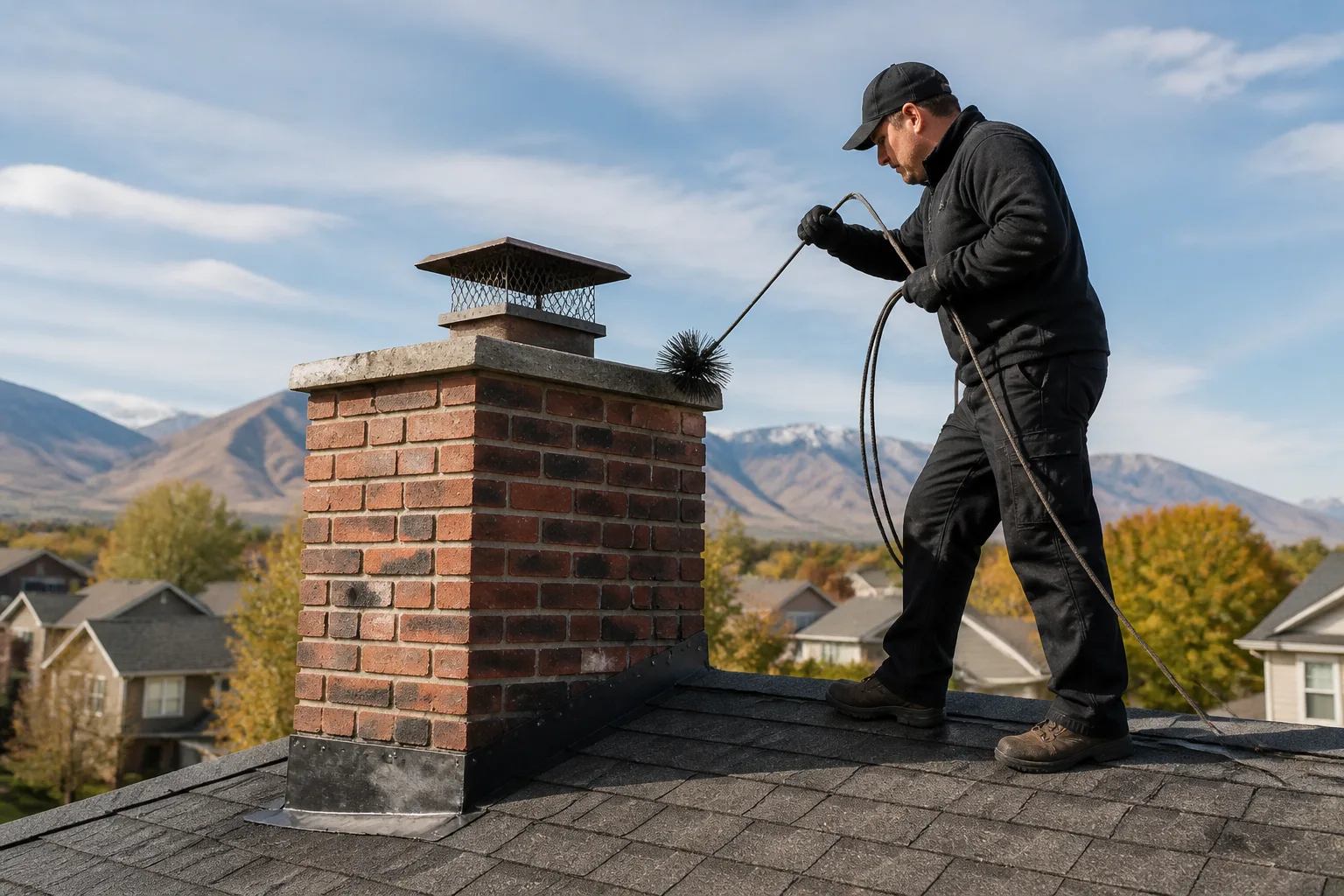
Top Signs You Need Chimney Cleaning Service – Don’t Ignore These
A chimney that smokes you out of the living room is easy to diagnose. The one that worries us more is the chimney that performs normally right up until it doesn’t. It drafts fine, burns fine, looks fine from the couch, and quietly coats the flue with stage-2 creosote no one can see from the firebox. That buildup is what ignites. So instead of a checklist of dramatic warning signs, this post is about the subtle functional changes that come before a failure, and what they’re telling you about the inside of your chimney in Herriman.
If you’d rather have a specialist look than guess from the hearth, call (833) 508-9248. We answer 24/7, with fast dispatch from 7am to 7pm, Sunday through Friday.
Key Takeaways
- Most dangerous chimneys show no visible smoke or smell problem until creosote reaches stage 2 or 3.
- Changes in how a fire draws and establishes are often the earliest signal that the flue is restricted.
- A summer smell in the firebox usually points to moisture meeting creosote, not just “old chimney smell.”
- Exterior staining, white powder on the masonry, and a damaged cap are clues to interior trouble.
- Cleaning intervals depend on fuel type and burn frequency, not a fixed once-a-year rule.
The Creosote You Can’t See Is the One That Matters
Creosote builds in three recognizable stages, and only the first is something a homeowner can spot from the firebox. Stage 1 is a light, flaky soot you can brush away. Stage 2 is a denser, crusty, tarlike deposit that clings to the flue walls and doesn’t come off with a standard brushing alone. Stage 3 is glazed, hardened, and fuel for a chimney fire. The catch is that stages 2 and 3 form higher up in the flue, well past where your eyes reach. A firebox that looks reasonably clean tells you almost nothing about the flue above it.
This is why we treat a visual check as a starting point, not a diagnosis. A proper inspection looks up the flue, and where the geometry calls for it, uses a camera to see what a flashlight can’t. We’re not going to tell you your flue is coated in stage-2 creosote and expect you to take our word for it. The evidence should be something you can see for yourself.
Why burn habits matter more than appearance
Slow, smoldering fires on unseasoned wood produce far more creosote than hot, efficient burns on dry wood. Two fireplaces that look identical in the firebox can have wildly different flues above them based on how they’re run. In Herriman’s cold-season burn patterns, where a stove might run daily for months, that difference compounds quickly. A clean-looking firebox after a heavy burn season is the exact situation where an inspection earns its keep.
Subtle Draw Changes Are an Early Warning
Before a chimney fails outright, it usually gets harder to use. The changes are small enough that homeowners adapt without noticing they’re adapting. Watch for these:
- Fires take longer to establish. If starting a fire now takes more kindling and patience than it used to, the flue may be restricted by buildup or a partial blockage.
- Slightly more smoke near the firebox opening. A puff of smoke when you open the door or add a log, more than before, suggests the draft is weakening.
- Smoke smell lingering in the room after a burn. A faint smoky odor hours after the fire dies down points to a flue that isn’t venting cleanly.
- Backdrafting on windy days. If Herriman’s canyon winds now push smoke back into the room when they didn’t before, that’s a draft problem worth investigating.
None of these means your chimney is about to fail. What they mean is the flue is telling you something has changed, and the cheapest time to find out what is before it becomes a repair. A blocked or restricted flue doesn’t just hurt draft; carbon monoxide has to go somewhere, and back into the house is the wrong answer.
A Chimney That Smells in Summer Is Saying Something Specific
That musty, acrid smell from the fireplace in July and August isn’t just stale air. It’s usually creosote meeting moisture. Creosote is hygroscopic, meaning it pulls moisture from humid air, and a Utah summer with afternoon storms gives it plenty to pull. As it absorbs water, it off-gasses that sharp, smoky-tarry odor, and the smell drifts down the flue into the house. A strong summer smell is a sign there’s meaningful creosote up there, not just a little soot, and it often comes with moisture getting in through a failing cap or crown.
It’s also a sign worth pairing with a look at the cap. A cap with a rusted or damaged screen lets rain in and, on the other side of the problem, lets birds and debris settle in the flue. We install and service caps from Famco and Copperfield because a cap in good condition is what keeps the moisture side of this equation in check. Fixing the smell usually means addressing both the creosote and whatever’s letting water reach it.
What the Exterior Tells You About the Interior
You can learn a lot about a chimney’s health without going on the roof, just by looking at the outside of it from the ground. Three things are worth a closer look:
- Staining on the masonry. Dark streaks or brown staining on the brick or siding point to water moving through the chimney or combustion byproducts escaping where they shouldn’t.
- White, powdery deposits. That chalky residue is efflorescence, salt pushed to the surface as moisture moves through the masonry and evaporates. It’s a reliable sign that water is getting in and moving through the structure.
- Cap and crown damage. A cracked crown, a missing cap, or a rusted screen all let water into the flue. What starts as a top-of-chimney problem becomes an interior one as the water works down.
These exterior signals don’t always mean the interior is in trouble, but they’re the reasons we look closer. A damaged cap or crown left alone long enough invites moisture into the flue, which can degrade the liner over time. That’s the kind of thing better caught with a cap and crown service than with a full reline.
How Often Do Herriman Chimneys Actually Need Cleaning?
Once a year is a reasonable starting point, but it isn’t a rule that fits every home. Frequency should follow fuel type, burn habits, and how the appliance drafts, not the calendar alone. Herriman’s cold winters and long burn seasons mean a heavily used fireplace or wood stove can need more attention than a decorative one that runs a few evenings a month. Here’s how we think about it:
- Heavy wood burning: A stove or fireplace used daily through the cold months typically needs an inspection at least annually, and cleaning when buildup warrants it. Many heavy users choose to check mid-season if the fire starts drawing poorly.
- Occasional burning: A fireplace used a handful of times a season may go longer between sweeps. An annual inspection still catches cap, crown, and liner issues before they grow.
- Gas or pellet appliances: These don’t produce creosote the way wood does, but they vent differently and still benefit from periodic inspection for blockages and vent condition.
The honest answer is that the right interval depends on what’s in the flue, and that’s something an inspection tells you. We inspect before we recommend, so the advice you get matches what’s actually there rather than a schedule pulled off a website.
When to Call a Pro
If you’re seeing any of the signs above, the practical move is an inspection rather than more research. Sweeping, inspecting, capping, repairing, and relining come down to what’s found in the flue, and a specialist should be able to show you the evidence before recommending anything. Our technicians have up to 15 years of experience, and we work exclusively with professional-grade materials: DuraFlex liner systems, HeatShield flue resurfacing, and Olympia Chimney components alongside the caps mentioned above. That depth matters because a full reline or resurfacing job is well beyond what a basic sweep can handle, and it’s the sort of problem that turns up during inspection often enough to be worth having one specialist manage from start to finish.
Related services in Herriman: if the inspection points to a cleaning, a chimney sweep handles it. If it points to structural issues, that’s chimney repair or fireplace repair, and the Chimney Sweep Herriman page covers the full scope.
The Bottom Line
The signs that matter most are the quiet ones: a fire that takes longer to start, a faint smoke smell hours later, a summer odor, a chalky stain on the outside of the chimney. They don’t shout, but they’re specific, and they’re the earliest clues that buildup or moisture is affecting how your chimney works. An annual inspection catches those changes before they turn into a liner replacement or a chimney fire. The work itself is routine when it’s caught early, and the inspection is where the conversation should start.
If you’re in Herriman and need help, Chimney Sweep Herriman offers free estimates. We answer 24/7, with fast dispatch from 7am to 7pm, Sunday through Friday. Call (833) 508-9248 and we’ll take a look and tell you what we find.
Frequently Asked Questions
You usually can’t tell from the firebox alone, because stage-2 and stage-3 creosote form higher in the flue where you can’t see. The better indicators are subtle: fires that take longer to establish, a little more smoke near the opening, a summer smell, or exterior staining. Call (833) 508-9248 for an inspection and we’ll show you what’s actually in the flue.
Often, yes. A musty, smoky smell in warm months usually means creosote is absorbing humidity and off-gassing, which is a sign of meaningful buildup, and it’s often paired with a cap or crown that’s letting moisture in. The fix is usually a combination of cleaning and addressing the cap. Call (833) 508-9248 to schedule and we’ll confirm what’s going on.
We’d recommend an inspection rather than waiting. Weak draft can be a small restriction or a partial blockage, and the cost of finding out early is much lower than the cost of a delayed problem. If it turns out work can safely wait, we’ll say so. Call (833) 508-9248 for a free estimate.
That’s efflorescence, a salt residue left behind as moisture moves through the masonry and evaporates. It’s a reliable sign water is getting into the chimney, which often traces back to a damaged crown or cap. Fixing the source before it reaches the liner is the goal. Call (833) 508-9248 and we’ll take a look at the cap and crown alongside the flue.
Written by the team at Chimney Sweep Herriman.
Need Chimney Cleaning Help?
Call Chimney Sweep Herriman - the local pro we connect you with is licensed and insured, with free written estimates in Herriman.
(833) 508-9248